

How to Clean a Washing Machine?
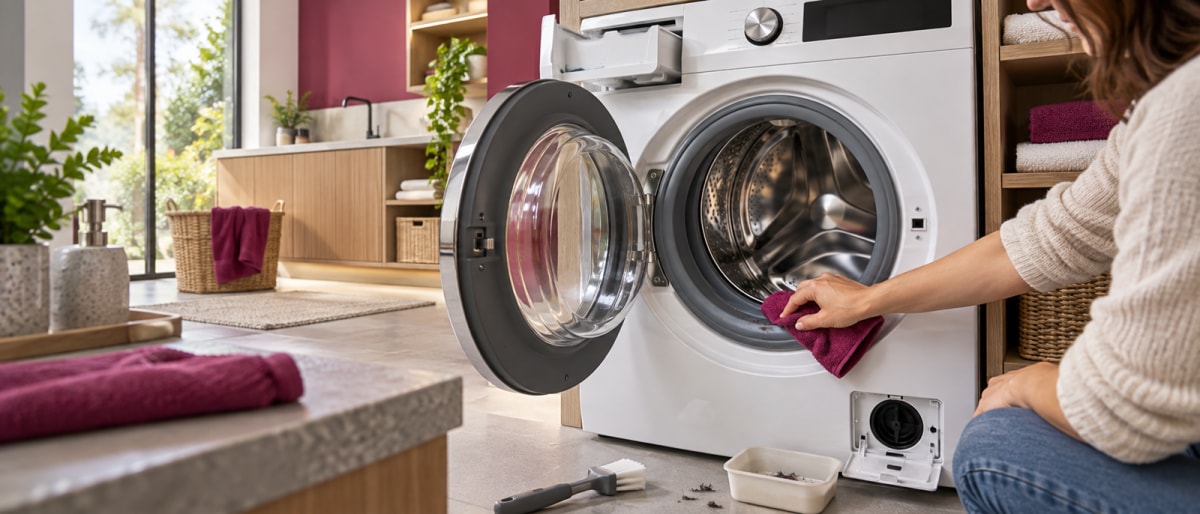
Cleaning the washing machine is an essential maintenance process to remove detergent residues, dirt, lint, and moisture accumulated inside the device. With regular use, deposits can form in parts such as the drum, door seal, detergent drawer, and filter. Over time, these deposits can cause unpleasant odors and, in some cases, drainage problems.
Washing machine cleaning is not just about washing the drum. Different parts of the device must be cleaned separately. Especially in front-loading models, the door seal requires more attention as it retains moisture.
Why should the washing machine be cleaned?
Detergent residues, water, dirt, and fabric fibers can accumulate inside the washing machine. If the door and detergent drawer remain damp for a long time, the likelihood of mold and unpleasant odors increases.
Regular maintenance can help prevent the following problems:
bad odors coming from the washing machine;
dirt accumulation in the drum and seal;
buildup of detergent residues;
clogging of the drain filter;
difficulty in draining water;
unpleasant odors on clothes after washing.
The frequency of cleaning depends on the intensity of use and the specific model. Therefore, it is necessary to check the maintenance instructions provided in the device's user manual. For example, some manufacturers recommend monthly cleaning of certain parts.
Which parts of the washing machine should be cleaned?
During washing machine cleaning, the main focus should be on several parts:
drum;
door rubber seal;
detergent drawer;
drain or pump filter;
mesh filter at the water inlet;
external surface of the device.
The structure of these parts may not be the same in all models. Specifically, the location of the filter, the removal procedure, and the names of special cleaning programs may vary by model.
How to clean the washing machine drum?
The drum is one of the parts of the washing machine that requires the most attention. Some models have a Drum Clean, Tub Clean, or similar special program. If such a function exists, it is more appropriate to use it as indicated in the device's manual.
To clean the drum:
Make sure there are no clothes inside the machine.
If the model has a special drum cleaning program, select that program.
If a cleaning agent is to be used, follow the instructions on it and the washing machine manufacturer's guidelines.
After the program finishes, leave the door open to allow the drum to dry.
In models with a special cleaning program, it is not correct to replace the regular wash program with random chemical agents. For example, LG recommends running the Tub Clean program with an empty drum and using a suitable cleaner in some of its models.
How to clean the washing machine seal?
In front-loading washing machines, water, lint, and small objects can remain inside the rubber seal around the door. If moisture remains for a long time, mold and deposits can form there.
To clean the washing machine seal:
open the door;
carefully pull back the folds of the seal;
remove lint, hair, and other debris trapped inside;
wipe the surface with a damp microfiber cloth;
allow the seal to dry after cleaning.
When using a chemical cleaning agent, it is essential to act according to the specific model's manual. Recommendations for the seal may differ among various manufacturers.
How to clean the washing machine detergent drawer?
Detergent and softener residues can harden in the drawer over time. For this reason, the detergent drawer should not be forgotten during washing machine cleaning.
Cleaning procedure:
Carefully remove the drawer.
Soften detergent residues with warm water.
Clean the compartment with a soft brush.
Wipe the area where the drawer is located with a damp cloth or soft brush.
After the parts are completely cleaned, place them back correctly.
Samsung also recommends cleaning the detergent drawer with a soft brush and warm water. The structure of the drawer may vary by model.
How to clean the washing machine filter?
The drain filter helps prevent lint, small objects, and other debris from entering the pump system. If the filter is clogged, problems with water drainage may occur.
To clean the washing machine filter, first, turn off the device and disconnect it from the power supply. The filter cover is usually located at the bottom of the machine, but the exact position depends on the model.
The general rule is as follows:
Turn off the machine and disconnect it from the power.
Open the filter compartment.
Place a container or towel underneath, considering that remaining water may flow out.
Carefully remove the filter.
Clean the lint, dirt, and other debris on it.
Wash the filter with water and a soft brush.
Place the filter back correctly and tighten it firmly.
Be careful when removing the filter as hot water may remain inside. It is also important to close the filter correctly after cleaning. Otherwise, water leakage may occur.
If the water drainage problem persists even when the filter is clean and the device shows an error code, you can check the article on washing machine codes and their meanings.
Is it necessary to clean the water inlet filter?
Some washing machines have a mesh filter where the water inlet hose connects. Deposits and small particles can accumulate in this filter.
Before cleaning this part, the water supply must be turned off. The removal and washing of the filter should be carried out according to the model's manual. Samsung recommends cleaning the water inlet hose mesh filter once or twice a year in some models.
How often should the washing machine be cleaned?
It is not correct to set the same cleaning interval for all models universally. Usage frequency, water characteristics, amount of detergent, and the device model can affect this period.
Practically, the following parts can be checked regularly:
Part | Recommendation |
Drum | According to the cleaning program in the model |
Door seal | Regular check and cleaning |
Detergent drawer | Regularly, more often if deposits form |
Drain filter | Regular check and cleaning |
Water inlet filter | According to manufacturer's instructions |
External surface | As it gets dirty |
For example, for some LG front-loading models, it is recommended to clean the dispenser and drain filter at least once a month. Other LG manuals indicate running the Tub Clean program 1–2 times a month. Therefore, the most accurate approach is to rely on the specific model's manual.
What can be done to prevent bad odors from the washing machine?
The problem of bad odors from the washing machine can mainly be related to moisture, detergent residues, and dirty parts. Along with cleaning, daily usage habits are also important.
After washing is finished:
do not leave clothes inside the machine for a long time;
do not close the door completely immediately;
ventilate the detergent drawer as much as possible;
clean the water and debris remaining in the door seal;
do not use excessive amounts of detergent.
Keeping the door and detergent drawer open helps the remaining moisture inside to dry.
What mistakes should be avoided when cleaning the washing machine?
Although cleaning the washing machine seems simple, the wrong agent and method can damage some parts of the device.
The main mistakes are:
using chemical agents not recommended by the manufacturer;
adding an excessive amount of cleaning agent;
opening the drain filter carelessly when there is hot water;
not closing the filter and covers correctly after cleaning;
adding clothes to the special cleaning program;
ignoring the washing machine's manual.
In particular, different cleaning chemicals should not be mixed with each other. If a cleaning product is to be used, it is safer to follow the instructions on it and the device manufacturer's guidelines.
When should you contact a specialist during washing machine cleaning?
The user can perform most of the routine cleaning work themselves. However, if the problem persists after cleaning, if the device leaks water, the drain does not work, or an unusual noise occurs, trying to solve the problem only by cleaning may not be correct.
Especially if the filter cannot be removed or if intervention in the internal parts of the device is required, it is more appropriate to check the technical manual for the model and contact a specialist if necessary.
Frequently asked questions about washing machine cleaning
What can be used to clean the washing machine?
This depends on the model and the part being cleaned. For the drum, it is more correct to use the cleaner recommended by the manufacturer or the special cleaning program on the device. For the seal, drawer, and filter, a soft brush, cloth, and water are usually sufficient.
How to clean the washing machine seal?
You can carefully open the rubber folds of the door to remove the lint and debris remaining inside, then wipe it with a suitable damp cloth. You should check the model's manual for the chemical agent to be used.
Where is the washing machine filter located?
The drain filter is located at the bottom of the device in many models. However, the exact location varies by model. In some top-loading models, the filter structure may be different.
What to do if there is a bad odor from the washing machine?
First, you need to check the drum, door seal, detergent drawer, and filter part. It is also important to ventilate the door and detergent drawer after washing is finished.
Conclusion
Washing machine cleaning is not just about washing the drum. The door seal, detergent drawer, drain filter, and in some models, the water inlet filter should also be checked regularly. These maintenance steps can help reduce the accumulation of dirt and residues inside the device, prevent unpleasant odors, and maintain the normal operation of the washing machine.
The most correct way to clean the washing machine is to consider the specific model's user manual. Because cleaning programs, filter structure, and usable agents vary by manufacturer and model.
Comments0
Be the first to comment
Share your thoughts on this article