

Important Points to Consider When Choosing Children's Furniture
The important points you need to consider when choosing children's furniture are a significant and responsible topic for every parent. The room where a child spends most of their day directly affects their physical and psychological development. Therefore, the choice of children's furniture should not be based solely on appearance, but rather on safety, quality, and comfort.
Properly chosen furniture creates comfort in the child's room and ensures convenience in daily use. When a suitable environment is created for the child, their play, learning, and rest processes are formed in a healthier way.
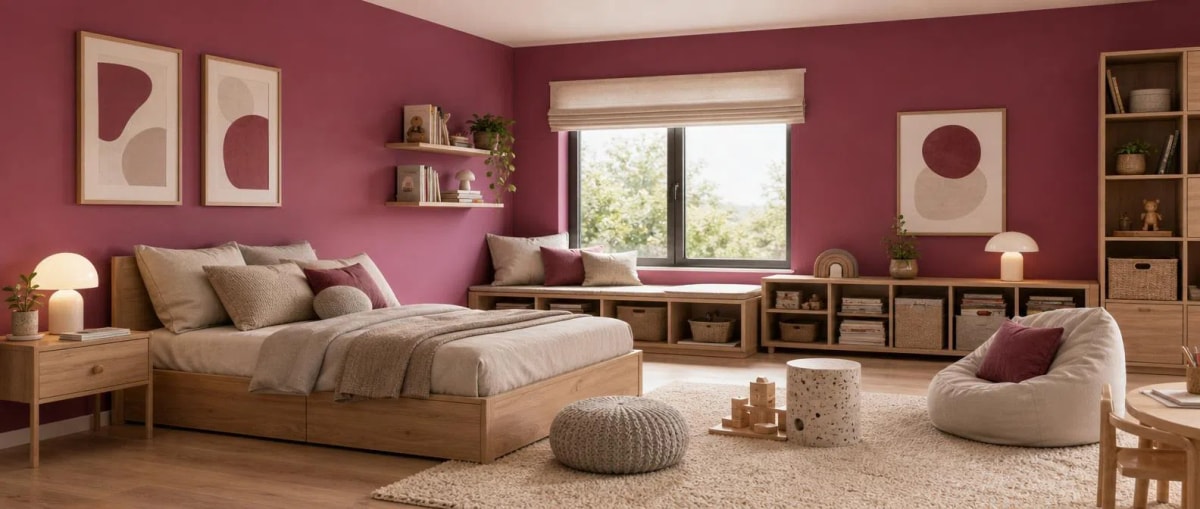
In modern times, there are many options for parents. Children's furniture sets with different designs and functions are considered an ideal solution from both an aesthetic and practical perspective. Since these sets consist of matching elements, they create a neat and harmonious look in the room.
Why is Safety the Most Important Factor When Choosing Children's Furniture?
Children spend most of their days in their rooms. They play, climb, run, fall, and get back up. This active lifestyle puts the safety of the furniture above all else. Unlike ordinary home furniture, children's furniture must meet specific standards, and parents should be well aware of these standards.
The main features of safe children's furniture are:
First, sharp corners are a serious source of injury for children. Quality children's furniture has rounded or specially cushioned corners. This small detail makes a big difference for active children.
Second, paint and varnish coatings must be non-toxic. Small children often touch furniture and sometimes put it in their mouths. Paints containing toxic substances pose serious health risks.
Third, tall furniture such as wardrobes, dressers, and shelves must be anchored to the wall. Children try to climb on this furniture, and improperly secured furniture can fall and cause serious injuries.
Fourth, the construction of the furniture must be sturdy. Loose screw connections, cracked wooden pieces, or fragile plastic parts are potential sources of danger.
Regarding certification, the CE mark in Europe, GS in Germany, and Möbelfakta in Scandinavia confirm that the furniture meets international safety standards. When buying children's furniture, be sure to check for these marks. While uncertified products may look attractive in terms of price, they are not favorable in terms of long-term risks.
Material selection is also an integral part of safety. Solid wood is the most ecological and durable choice. Wood obtained from FSC-certified forests is both a sign of respect for the environment and an indicator of quality. MDF material is more affordable, but MDF with E1 or E0 certification, which has low formaldehyde content, should be chosen.
Why Are Children's Furniture Sets More Preferred?
Children's furniture sets have become an increasingly popular choice in recent years. Behind this are not only aesthetic advantages but also practical and economic reasons.
Children's furniture sets combine a bed, wardrobe, dresser, desk, bookshelf, and sometimes toy storage elements within a unified design language. The advantages of this unity are many.
In terms of visual integrity, since all furniture is from the same style, color, and material family, the room looks harmonious and planned. Aesthetic mismatches that might arise when trying to match separate pieces of furniture are completely eliminated.
Financially, children's furniture sets offer significant savings compared to buying each element separately. Additionally, a one-time purchase reduces delivery costs.
In terms of time savings, instead of spending hours or even days searching for matching furniture, choosing and ordering a ready-made set simplifies the process significantly.
Modularity is the strongest aspect of modern children's furniture sets. Sets from good brands can be reconfigured as the child grows. For example, models that convert from a crib to a bed, height-adjustable desks, and wardrobe systems that can be expanded by purchasing additional modules fall into this category.
When choosing a set, it is important to consider the child's age group. There are different needs for periods from 0 to 3 years, 4 to 7 years, and 8 to 12 years. Buying a base set in neutral color tones makes it easier to adapt to the child's changing tastes over time. It is always possible to add decorative elements later.
What Should Be Considered When Choosing Cribs?
Cribs are the first piece of furniture that enters a newborn's life, so the selection process requires special seriousness. The quality of the baby's sleep, safety, and comfort depend directly on the features of the crib.
There are various types of cribs on the modern market:
Classic cribs soothe the baby with a rocking function and have a traditional design. They are usually used from 0 to 12 months. Convertible cribs are considered a more efficient choice. These cribs turn into a mini-bed as the child grows, and in some models, into a sofa bed, and can be used from 0 to 3 years. Co-sleeping cribs are attached to the side of the mother's bed, are very convenient for night feedings, and are recommended from 0 to 6 months. Electronic cribs combine vibration, rocking, music, and white noise functions, which are a great help to parents in soothing the baby.
Technical points to consider when choosing a crib are:
Mattress firmness is extremely important. The baby mattress should not be too soft, as soft surfaces increase the risk of SIDS (Sudden Infant Death Syndrome). The mattress should fit firmly into the crib, leaving no gaps at the edges.
The spacing between the bars should not exceed 6 cm. Otherwise, the baby's head or limbs could get stuck between the bars.
It is essential that paint and coating materials are completely non-toxic. We recommend not buying cribs without CE certification.
Height adjustment is also an important feature. As the baby grows and starts to sit up and stand, there should be an option to lower the bed level so the baby does not fall out of the crib.
Finally, make sure there are no ropes, cords, or long pieces of fabric around the crib. These pose a risk of strangulation for the baby.
What Features Should Children's Beds Have?
Children's beds start being used during the transition period from 2 to 3 years and can accompany the child until adolescence. A properly chosen bed forms both healthy sleep and a sense of having their own space in the child's room.
There are various bed models for children on the modern market:
A floor bed is at floor level, in accordance with the Montessori methodology. It develops the child's independence; they can get in and out of bed whenever they want. There is no risk of falling, so it is especially recommended for ages 2 to 6.
A raised bed is a traditional model. A storage drawer or an extra bed can be placed underneath. It is suitable for every age group.
A bunk bed is an indispensable solution for families with two children in the same room. It saves space and strengthens the feeling that children have their own space. However, since the top bunk is accessed by a ladder, it is not recommended for children under 6 years old.
Children's beds designed in the shape of a house create both a comfortable sleep and an interesting play environment for children. It combines a play and sleep space for children. It develops imagination and gives the room a special character.
The main features that children's beds should have are:
Orthopedic mattress support is essential for the proper development of the child's spine. Prefer an orthopedic mattress suitable for the child's age, not a very soft one.
Ecological material selection is also important. Solid wood or certified MDF is the most suitable choice for a nursery.
Side guards are mandatory, especially for children aged 2 to 5. The child may roll over in their sleep and fall out of bed.
In terms of size, 90x200 cm is the standard children's bed size. This size allows for comfortable use from age 6 until the end of adolescence.
How Do Children's Wardrobes and Shelves Affect Room Organization?
Disorder in a child's room is often caused by the lack of proper storage solutions. Toys scattered on the floor, books thrown in a corner, clothes in an unopened suitcase... All of these can be completely solved with properly chosen children's wardrobes and shelves.
The right storage furniture keeps the room organized and teaches the child to manage their own belongings. This skill lays the foundation for the development of important qualities such as a sense of responsibility, independence, and self-regulation.
The main principles of wardrobe selection are:
The issue of height and anchoring is very important. Tall children's wardrobes must be anchored to the wall with special bolts. Even wardrobes that look stable cannot bear a child's weight.
Regarding the choice between open shelves and closed wardrobes, both have their advantages. Open shelves allow the child to see their belongings and form the habit of tidying them up themselves. Closed wardrobes give the room a neater look. Combining these two solutions gives the most optimal result.
Modular wardrobe systems are the smartest investment when thought of long-term. Choosing a small base in the first year and expanding the system with additional modules later takes into account both the budget and the changing needs of the room.
The contribution of shelf types to the room is undeniable. Bookshelves where books are arranged with their covers visible increase children's interest in books. The system in open toy shelves with cubic boxes teaches the child to tidy up their toys themselves because the place for everything is visible. Combined shelf and desk systems stand out as a multi-functional solution for small rooms.
When choosing a children's wardrobe, also pay attention to the presence of compartments that allow for the separation of clothes. The ability to divide by season, type of clothing, or between school and home clothes teaches the child self-care skills from an early age.
Why Are Children's Dressers an Important Storage Solution?
Children's dressers are a complementary element of a child's room. Especially starting from infancy, its role is indispensable. It is difficult to organize this work efficiently without a children's dresser to store the abundance of children's clothes, care supplies, and small items in an orderly manner.
Although children's clothes are small, they are numerous. Shirts, socks, underwear, pajamas, festive clothes... Cramming all of these into a suitcase or wardrobe is both difficult and time-consuming. A children's dresser allows you to dedicate each drawer to a specific category.
Important points to consider when choosing children's dressers are:
An anti-toppling system is a must. All children's dresser models should come with metal mounting kits for wall anchoring. Children often try to climb on the drawers, and an unsecured dresser can easily fall over.
The movement mechanism of the drawers is also an important detail. Choose drawers with mechanisms that close softly and do not pinch fingers. Children often push drawers shut hard, and there is a high probability of pinching their fingers.
In terms of height, a dresser model between 80 cm and 90 cm is multi-functional. It is used both as a baby changing surface and performs the function of clothing storage. With a special changing top accessory, this dresser turns into a complete baby care station.
The most economical solution for families with a baby is to buy a crib, dresser, and changing top as a children's furniture set. This solution is both cost-effective and preserves the aesthetic integrity of the room.
Conclusion
The right choice of children's furniture directly supports your child's physical safety, comfortable sleep, orderly living environment, and mental development. This process, which starts with children's furniture sets and is completed with cribs, children's beds, children's wardrobes and shelves, as well as children's dressers, requires a patient, informed approach that centers on the child's needs.
Remember that this furniture is not just objects. They are part of the space where your child opens their eyes to the world, plays, learns, and grows. The attention you pay to this investment will replace it for many years to come.
Comments0
Be the first to comment
Share your thoughts on this article