

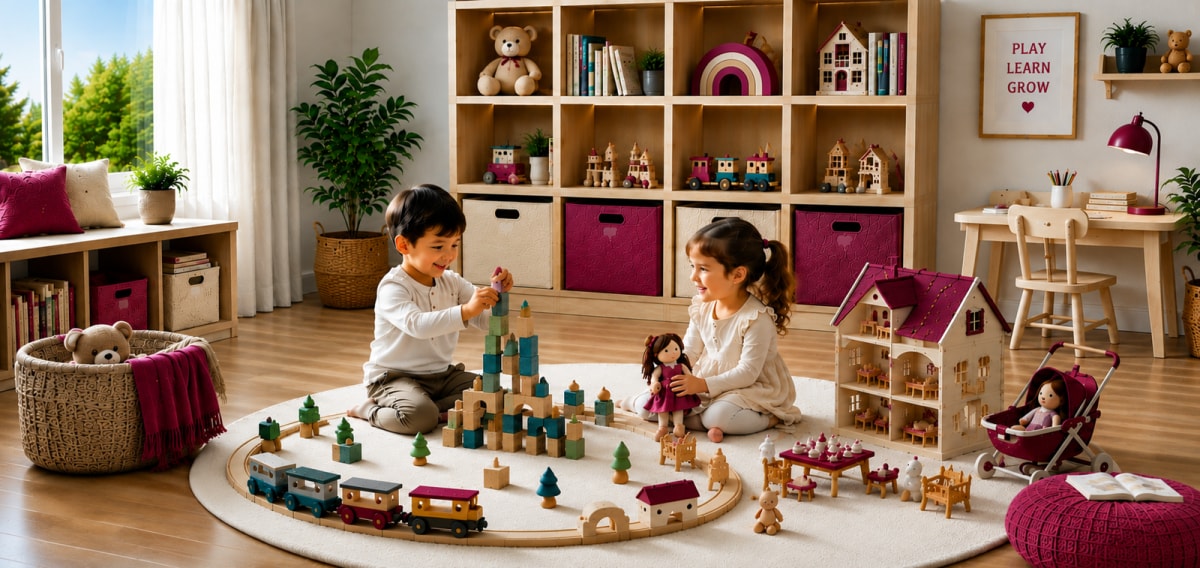
Detailed Guide to Toys
Toys are an essential part of children's daily lives and, in addition to providing entertainment, they support their physical, mental, emotional, and social development. Toys selected according to age and interests make the learning process more engaging, foster creativity, and help in the formation of new skills.
Toys include soft toys, remote-controlled toys, educational toys, musical toys, dolls and accessories, toy figures, toy vehicles, board games, DIY toys, model kits, toy weapons, play money, and children's play equipment. Each type of toy is designed for different age groups and purposes.
In this guide, you will find useful information about types of toys, their features, criteria for choosing the right ones, safety precautions during use, and care instructions.
What are the types of toys?
Toys are categorized based on their purpose and function. A well-chosen toy helps a child both have fun and acquire new skills.
Soft toys – A safe and comfortable choice for infants and young children.
Remote-controlled toys – Includes cars, helicopters, boats, and other remote-controlled models.
Educational toys – Develop logical thinking, memory, and learning skills.
Musical toys – Attract a child's attention with sound and light effects, forming a sense of rhythm.
Dolls and accessories – Make role-playing more interesting and support creativity.
Toy figures – Used for play and collection purposes.
Toy vehicles – Consists of cars, trains, planes, and other models.
Board games – Develop logical thinking and teamwork skills.
DIY toys – Develop creativity and manual skills.
Model kits – Form attention, patience, and planning skills.
Toy weapons – Intended for role-playing and should be chosen according to age.
Play money – Used for role-playing and toy collections.
Children's play equipment – Encourages active play by increasing physical activity.
What should be considered when buying soft toys?
Safety and quality should be the main priority when choosing soft toys.
Material quality – Should be made of safe, skin-friendly materials.
Filling material – Prefer high-quality filling that retains its shape for a long time.
Stitch durability – Strong seams increase the durability of the toy.
Size – It is safer to choose a size appropriate for the child's age.
Ease of care – Models that are easy to clean are more convenient for daily use.
How do educational toys affect children's development?
Educational toys combine play and learning to develop various skills in children.
Strengthens logical thinking – Develops analysis and decision-making skills.
Strengthens memory – Repetitive activities ensure better retention of information.
Teaches colors and shapes – Develops visual perception.
Forms counting skills – Facilitates the learning of mathematical concepts.
Increases problem-solving ability – Develops the ability to think in different situations.
Which age groups are remote-controlled toys suitable for?
Remote-controlled toys are interesting products that combine technology with play. Cars, helicopters, boats, and other remote-controlled models help develop children's coordination, attention, and control skills.
Develops coordination – Controlling via a remote strengthens hand-eye coordination.
Increases spatial awareness – Develops the ability to move in different directions.
Offers a wide selection of models – Different models are available for both beginners and experienced users.
Usage environment should be considered – Some models are designed for indoor use, others for outdoor spaces.
Power source varies – Battery-operated or rechargeable battery options are available.
What benefits do musical toys offer for children?
Musical toys attract children's attention with sound, melody, and light effects. They have a positive impact on the formation of their hearing and sense of rhythm, especially in early childhood.
Develops hearing skills – Helps distinguish different sounds.
Strengthens sense of rhythm – Games accompanied by music form a sense of rhythm.
Increases attention – Interactive functions keep the child's interest for a long time.
Encourages active participation – Buttons and various functions make the play process more interesting.
How do dolls and accessories contribute to children's play?
Dolls and their accessories are an integral part of role-playing games. These toys allow children to reenact daily life, expand their imagination, and develop social skills.
Enriches role-playing – Allows for reenacting various life scenarios.
Develops creativity – Different clothing and accessories create new play ideas.
Expands imagination – Supports the development of fantasy.
Offers various thematic sets – It is possible to choose from themes like home, school, professions, and others.
Age-appropriate models are available – Products are manufactured for different age groups.
Why are toy figures widely popular?
Toy figures are products that represent various heroes, animals, and fantastic characters. They are used both during play and for collection purposes.
Allows for scenario-based play – Children can create games based on different themes.
Suitable for collection – Figures produced in series generate great interest.
Has detailed design – Realistic appearance makes the game more interesting.
Made of durable materials – Has a sturdy construction suitable for daily use.
Covers various themes – It is possible to choose from animals, superheroes, and other characters.
Why are toy vehicles popular?
Toy vehicles are among the most popular types of toys chosen by children. Cars, trains, planes, and other models add dynamics and creativity to games.
Introduces vehicles – Children gain initial knowledge about different types of transport.
Makes active play more interesting – Can be used together with garages and road sets.
Produced in various sizes – It is possible to choose between small and large models.
Realistic models are available – Many products are designed to match the design of real vehicles.
Also chosen for collection – Special series attract the interest of collectors.
What skills do model kits develop?
Model kits are made based on assembling various parts. These products have a positive impact on the development of attention, patience, and planning skills.
Increases attention – Assembling parts in the correct order requires attention.
Forms patience – Completing the model in stages creates a habit of patience.
Develops fine motor skills – Working on small details increases hand dexterity.
Strengthens logical thinking – Working in the order according to instructions develops planning skills.
Offers different difficulty levels – Options are available for both beginners and experienced users.
How do DIY toys develop children's creativity?
DIY toys allow children to create new products using various materials. These activities help in the development of creativity and practical skills.
Encourages creativity – Children can freely implement their own ideas.
Develops manual skills – Cutting, gluing, and other crafts strengthen hand-eye coordination.
Forms attention and patience – Step-by-step tasks create a habit of working in a planned manner.
Introduces new materials – Using paper, cardboard, plasticine, and other tools enriches creative thinking.
Suitable for family activities – Jointly prepared projects strengthen communication between parents and children.
What is play money used for?
Play money is an educational product designed to teach children financial concepts and the shopping process through play.
Develops counting skills – Helps learn simple calculations.
Creates a concept of shopping – Teaches the use of money and principles of exchange.
Enriches role-playing – Makes store and market-themed games more interesting.
Produced in various designs – Models in different sizes and appearances are available.
Used for educational purposes – Useful in preschool education and development activities.
Why are board games widely used?
Board games are an ideal choice for spending time with family and friends. In addition to entertainment, they contribute to the development of thinking and communication skills.
Develops logical thinking – Strengthens strategy building and decision-making skills.
Improves communication – Playing as a team forms a habit of cooperation.
Teaches following rules – Develops a sense of responsibility.
Suitable for family leisure – Allows different age groups to spend time together.
Offers a wide selection – Strategy, logic, knowledge, and entertainment-oriented games are available.
What benefits does children's play equipment offer?
Children's play equipment is designed to increase physical activity and encourage active play. It can be used both outdoors and indoors.
Supports physical development – Active games meet the child's daily need for movement.
Develops coordination – Strengthens balance and movement skills.
Encourages spending time outdoors – Makes active leisure more interesting.
Designed for different age groups – Models suitable for different needs are available.
Made of durable materials – Considered suitable for long-term use.
How should toys be stored properly?
Proper storage of toys helps preserve their appearance, functionality, and lifespan.
Clean regularly – It is recommended to clean toys periodically to maintain hygiene.
Store in a dry environment – Humidity can reduce the quality of some materials.
Organize by category – Boxes and shelves both maintain order and make searching easier.
Pay special attention to electronic toys – Store battery-operated models according to the manufacturer's recommendations.
Store unused toys separately – This reduces the risk of damage and creates order in the room.
What points should be considered when buying toys?
When choosing a toy, it is important to pay attention not only to appearance but also to safety and quality indicators.
Check age appropriateness – The product should be suitable for the child's age.
Evaluate material quality – Prefer materials that are safe and meet quality standards.
Choose sturdy construction – Durable products are used for a longer time.
Consider the purpose of use – The toy should be chosen according to the child's interests and developmental level.
Learn about care features – Models that are easy to clean are more practical for daily use.
Conclusion
Toys contribute significantly to children's physical, mental, and social development, in addition to providing entertainment. Soft toys, remote-controlled toys, educational toys, musical toys, dolls and accessories, toy figures, toy vehicles, board games, DIY toys, model kits, play money, and children's play equipment provide a wide range of choices for different age groups.
A well-chosen toy should match the child's interests, age, and developmental level. At the same time, regular cleaning and proper storage of toys extend their lifespan, maintaining their safety and quality for a long time.
Comments0
Be the first to comment
Share your thoughts on this article