

Useful Tips for Choosing Cleaning and Hygiene Products
Cleaning and hygiene products play a crucial role in maintaining a healthy and safe living environment. Used in homes, offices, public facilities, and industrial areas, these products help make daily cleaning more effective, ensure hygienic conditions, and protect various surfaces. Properly selected products not only improve cleaning quality but also help prevent additional costs during long-term use.
Cleaning and hygiene products, cleaning agents, and cleaning tools are designed to meet various cleaning needs. While some products are intended for kitchens and sanitary facilities, others are more suitable for cleaning glass, floors, furniture, and other surfaces. Cleaning and hygiene products, cleaning agents, and cleaning tools selected according to their purpose simplify the cleaning process, save time, and allow for better results.
This article provides detailed information on the key points to consider when choosing cleaning and hygiene products, the areas of use for cleaning agents and cleaning tools, selection criteria, safe usage rules, and important tips to keep in mind when purchasing products.
What should be considered when choosing cleaning and hygiene products?
When choosing cleaning and hygiene products, first and foremost, their purpose, quality, and safety features should be considered. Properly selected products provide more effective cleaning and do not damage surfaces or health during use.
Area of use. Each product is designed for a specific surface or cleaning task. Therefore, it is important to determine the intended purpose of the product in advance.
Product composition. It is more appropriate to prefer products with safe ingredients, especially for frequently used agents.
Quality and durability. Quality products provide more effective results, are used for a long time, and do not create additional costs.
Ease of use. Ergonomically designed tools and products with practical packaging allow for more comfortable daily cleaning tasks.
What are cleaning agents used for?
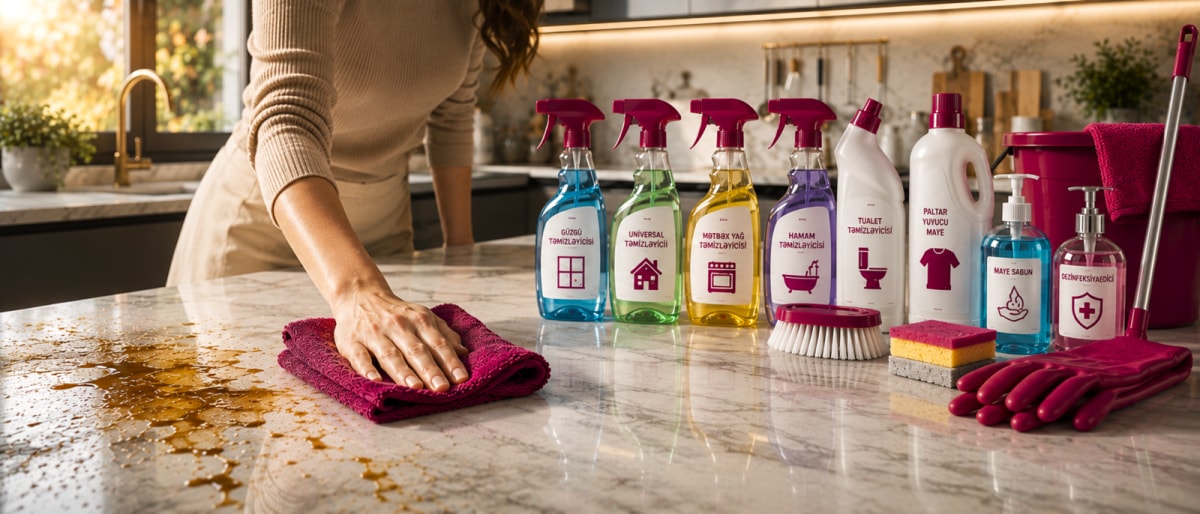
Cleaning agents are used for cleaning, disinfecting, and maintaining hygienic conditions on various surfaces. Products selected according to the area of use provide higher efficiency and help protect surfaces.
Universal cleaners. Intended for daily use and applied to cleaning many surfaces.
Kitchen cleaners. Designed for removing grease, food residues, and other dirt.
Bathroom cleaners. Used for removing limescale, soap scum, and bacteria.
Glass cleaners. Ensure streak-free cleaning of windows, mirrors, and other glass surfaces.
Floor cleaners. Used for cleaning and protecting various floor coverings.
Disinfectants. Help maintain hygiene and reduce microorganisms.
How to choose between cleaning tools?
When choosing cleaning tools, the area of use, material quality, and ease of use should be considered. Properly selected tools help perform cleaning tasks faster, clean surfaces more effectively, and reduce physical strain.
Mops. Used for floor cleaning. Models with microfiber heads absorb water well, remove dirt more easily, and do not leave streaks on the surface.
Brooms. Used for collecting dust and small debris. Soft and hard-bristled models can be chosen according to different surfaces.
Brushes. Considered a practical choice for tile gaps, floors, and other hard-to-clean areas. Models of various sizes are suitable for different cleaning tasks.
Microfiber cloths. Help clean sensitive surfaces like glass, furniture, and household appliances without leaving streaks.
Buckets and wringing systems. Ensure more efficient use of water during floor cleaning and facilitate the use of mops.
Which cleaning products are most suitable for different surfaces?
Cleaning products for different surfaces should be chosen according to their material. Inappropriate agents can negatively affect the appearance and quality of the surface.
Wood and parquet. It is recommended to use soft-composition cleaners specially prepared for these surfaces.
Laminate floors. Agents designed for laminate preserve the shine of the surface and reduce the risk of swelling.
Glass and mirrors. Streak-free glass cleaners ensure the surface looks transparent and clean.
Ceramics and tiles. Products that remove strong dirt and limescale residues are considered more suitable for these surfaces.
Metal surfaces. Special agents for stainless steel and other metal parts help maintain the shine of the surface.
Useful tips for safe use of cleaning products
Safe use of cleaning products is important both for protecting health and for more effective application of the products. It is possible to prevent possible risks by following simple safety rules.
Use protective gloves. Since products with strong chemical compositions can irritate the skin, the use of gloves is recommended.
Do not mix products. Using different chemical agents together can create dangerous reactions.
Work in a ventilated environment. Especially when using disinfectants and strong cleaners, the room air should be refreshed regularly.
Read the instructions for use. The instructions on the product are the main source for proper use and safety.
Keep out of reach of children. Cleaning agents should be kept in a safe place and in their original packaging.
How to extend the service life of cleaning tools?
To extend the service life of cleaning tools, it is important to take proper care of them and store them in suitable conditions. Regularly cleaned and well-maintained tools retain their functionality for a longer time and improve the quality of cleaning tasks.
Clean after use. Mops, brushes, and other tools should be washed after each use, and remaining dirt and cleaning residues should be completely removed.
Ensure complete drying. Mold, bacteria, and unpleasant odors can form on tools stored damp. Therefore, they should be allowed to dry completely after washing.
Store properly. When cleaning tools are stored in a dry and ventilated place, material deformation and wear are reduced.
Replace worn parts. If mop heads, sponges, and other quickly wearing parts are updated in time, the cleaning quality remains at a high level.
What mistakes should be avoided when buying cleaning products?
When buying cleaning products, some mistakes can create additional costs and prevent the expected cleaning result from being achieved. When choosing a product, attention should be paid not only to price but also to quality and purpose.
Prioritizing only price. Cheap products are not always a profitable choice. Quality products are considered more economical in the long run because they are used for a longer time.
Ignoring the area of use. Products prepared for different surfaces have different characteristics. A wrong choice can cause damage to the surface.
Not reading the composition. The composition and instructions for use of the product should be checked in advance. This is important for both safe use and achieving better results.
Buying low-quality tools. Low-quality cleaning tools become unusable in a short time and create additional costs.
Conclusion
Cleaning and hygiene products selection criteria include area of use, product quality, safety features, and ease of use. While cleaning agents help clean various surfaces effectively and maintain hygiene, cleaning tools allow daily tasks to be performed faster and more comfortably.
Quality products selected according to their purpose create a cleaner and healthier environment in both living and working spaces. Proper use and regular maintenance of the products extend their service life, prevent additional costs, and ensure long-term efficiency.
Comments0
Be the first to comment
Share your thoughts on this article