

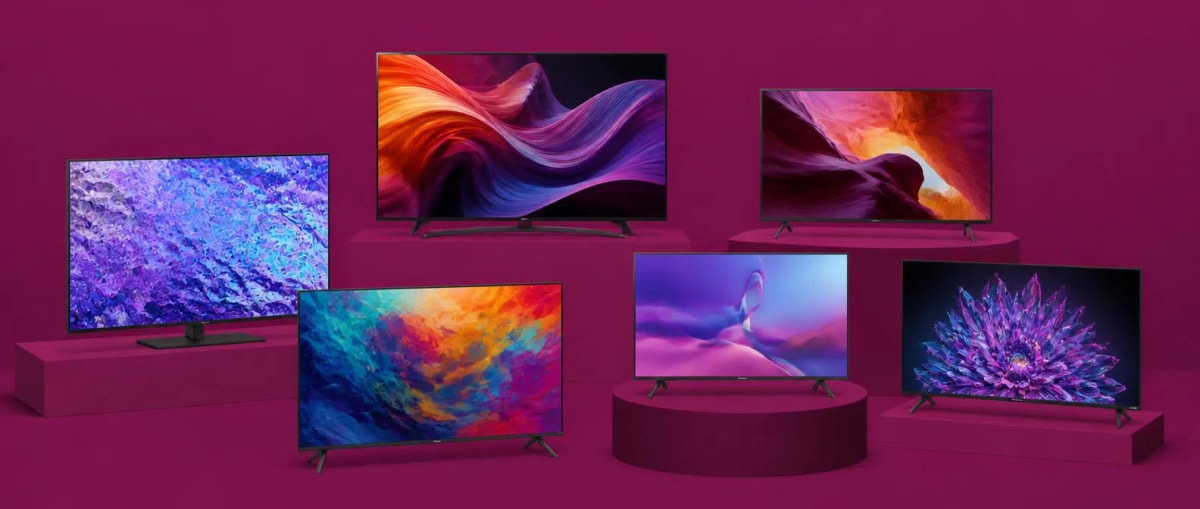
Choosing a TV in 2025-2026
TVs in 2025–2026 are no longer simple household appliances, but multifunctional smart systems that have become the main digital hub of the home. TV selection requires users to consider not only screen size, but also panel technology, image processing, HDR support, refresh rate (Hz), sound system quality, smart operating system, and even energy consumption.
In the TV market, brands like Samsung, LG, Sony, Xiaomi, TCL, Philips, Hisense, Panasonic, and others can offer completely different technical capabilities even within the same price range. Therefore, looking only at the brand is not enough to make the right choice; you need to understand every technical detail.
This guide explains TV selection down to the smallest detail and helps you choose the right model based on real-world usage scenarios.
Why have TVs become a more complex choice in 2025–2026?
TVs used to be devices that only showed television channels. Now the situation has completely changed, and TVs perform the following functions:
Processing 4K and 8K videos
Running platforms like Netflix, YouTube, Disney+
High performance for gaming consoles (PlayStation, Xbox)
Full synchronization with mobile phones and tablets
AI-powered image optimization
Voice assistants (Google Assistant, Alexa)
For this reason, a TV is no longer just a simple screen, but a smart device with a powerful processor.
The most important stage of TV selection: purpose of use
TV selection should always start with the purpose of use, as each type of use creates different technical requirements.
For watching movies and series
OLED or high-quality QLED
Dolby Vision support
Strong contrast and deep blacks
Good sound system (Dolby Atmos)
For gaming (Gaming TV)
120Hz or higher refresh rate
HDMI 2.1 support
Low input lag
VRR and ALLM technologies
For daily use
4K LED or QLED
Stable smart system
Mid-range sound quality
Screen size and viewing distance for TVs (a very important factor)
If TVs are not chosen correctly in terms of size, viewing comfort is seriously compromised.
Standard size distribution:
32–43 inches → small rooms (bedroom)
43–55 inches → medium rooms (standard living room)
55–65 inches → large living rooms
65–85+ inches → premium home theater
Viewing distance rule:
Full HD → screen size × 2.5
4K UHD → screen size × 1.2–1.5
For example, the ideal distance for a 65-inch 4K TV is 2–2.5 meters.
In-depth comparison of TVs and panel technologies
LED TVs (LCD + LED backlight)
LED TVs are the most common technology. They work with backlighting and are more affordable. However, contrast and black level depth are not as strong as OLED.
Advantages:
Low price
Energy efficiency
Wide model selection
QLED TVs (Quantum Dot technology)
QLED TVs are an advanced form of LED technology. Colors are more vivid and brightness levels are very high.
Advantages:
High image quality in daylight
Wider color gamut
Long-lasting panel
OLED TVs (self-lighting pixel system)
OLED technology is a system where each pixel is lit individually. This creates perfect black and infinite contrast.
Advantages:
Cinema-quality image
Perfect contrast
Ultra-thin design
Faster response time
TVs and image quality (resolution and pixel structure)
HD (720p)
Outdated technology. Can be used for small screens.
Full HD (1080p)
Mid-level. Sufficient for small and medium screens.
4K UHD (3840×2160)
Modern standard. Considered the most balanced choice.
8K UHD
Very high level of detail, but real content is still limited.
TVs and the real difference of HDR technology
HDR technology ensures that the image looks more realistic and vivid.
HDR10 → standard level
HDR10+ → dynamic contrast
Dolby Vision → highest quality
TVs with HDR support offer more natural colors and better light balance.
TVs and refresh rate (Hz) performance
Refresh rate determines how many frames a TV shows per second:
60Hz → standard use
120Hz → ideal for gaming and fast video
144Hz → premium gaming level
High Hz is especially important for gaming and sports broadcasts.
Comparison of TVs and smart operating systems
Android TV → widest app ecosystem
Google TV → more modern interface and AI recommendations
Tizen (Samsung) → fast and stable system
webOS (LG) → simple and intuitive interface
VIDAA (Hisense) → lightweight and fast system
The smart system determines the daily ease of use of the TV.
TVs and sound quality (the often forgotten part)
Many users focus only on the image, but sound quality is also important:
Dolby Atmos support
2.1 / 4.1 / 5.1 channel system
Built-in subwoofer
AI sound optimization
A good sound system can reduce the need for an additional soundbar.
TVs and brand analysis (real differences)
Samsung
QLED technology, high brightness, powerful smart system.
LG
OLED leader, the strongest brand in cinema and color accuracy.
Sony
Image processing processor is very powerful, offers premium quality.
Xiaomi
Affordable price, Android TV and smart features.
TCL
One of the best price-performance balances.
Philips
Different visual experience with Ambilight technology.
Hisense
Offers budget-friendly and stable performance.
The most serious mistakes when choosing TVs
Choosing only based on screen size
Buying Full HD instead of 4K
Ignoring the Hz indicator
Not checking the Smart TV system
Ignoring important technologies like HDMI 2.1
TVs and the real benefits of the Tenderyard platform
TV selection is often confusing because information is scattered across different sites and comparing models becomes difficult.
The Tenderyard platform simplifies this process and creates a more convenient selection opportunity for the user:
Ability to create and share ads for TVs and other products
Shows results according to needs with a search and matching system
Allows comparing brands and technical specifications
Helps make a more accurate choice with a filtering system
Makes ads clearer with video and media sharing function
Presents products better with Reels and short video formats
Creates direct contact and fast communication between users
Allows use from anywhere with mobile and web platform
This approach turns Tenderyard not just into an ad platform, but into a digital system that provides faster search, sharing, and selection.
Conclusion
TVs in 2025–2026 are no longer simple devices, but high-tech smart systems. To make the right choice, screen technology, size, HDR, Hz, smart system, and purpose of use should be evaluated together.
The most important point is that the best TV is not the same for everyone. The most correct choice is the model that suits your needs.
Tenderyard makes this process more professional, transparent, and comfortable, creating a real advantage for the user to make an informed decision.
Comments0
Be the first to comment
Share your thoughts on this article