

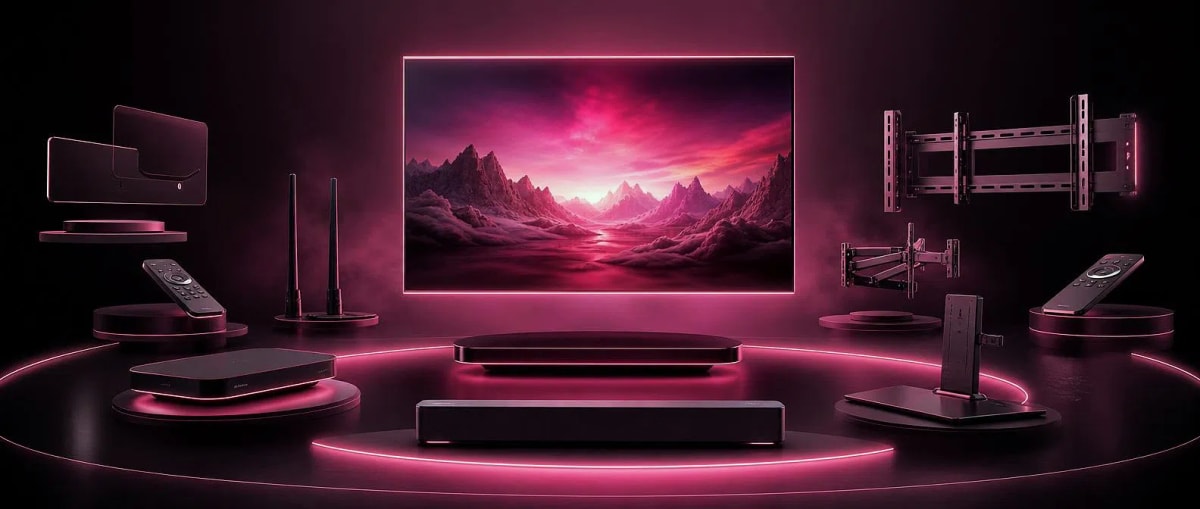
Complete Guide to TV Accessories
The complete guide to TV accessories is a comprehensive and detailed source of information covering the selection and usage of additional equipment that makes the TV viewing experience more functional, comfortable, and safe. In modern times, a television is used not only as a display device but also as a multimedia center in homes and offices. Therefore, the role of accessories that enhance its functionality has become even more significant. When chosen correctly, TV stands, brackets, protective screens, Smart Box devices, antennas, and remote controls improve the technical performance of the TV, increase ease of use, and create a more comfortable viewing experience.
At the same time, it should be noted that incorrectly chosen accessories can negatively affect image quality, reduce device safety, and lead to additional costs. Therefore, it is important to be informed about the function, technical specifications, material quality, and compatibility of each accessory with the TV. This guide helps the user make the right choice and enables them to get the maximum benefit from their TV system.
Why are TV accessories important?
TV accessories are not just additional equipment, but also important technical and aesthetic elements that ensure the comfortable, safe, and functional use of the device. Properly chosen accessories not only improve image quality but also extend the life of the device, increase technical stability, and bring overall ease of use to a higher level.
Most searched terms by users:
TV accessories
TV accessories
equipment for TV
choosing TV accessories
additional devices for TV
Properly chosen accessories increase ease of use and expand the overall capabilities of the TV system, making it a more functional device.
How should TV stands and frames be chosen?
TV stands and frames are essential accessories used for both functional and aesthetic purposes. They ensure the stable and safe placement of the TV, while also creating visual harmony with interior design and completing the overall look of the room.
When choosing a stand, special attention should be paid to the following points:
TV size and weight
Load-bearing capacity and structural strength
Quality and durability of the material used
Availability and functionality of storage compartments
Compatibility with room size and interior design
Frames help make the TV's surrounding appearance more aesthetic and modern, and in some cases, they also provide additional protection, allowing for safer use of the device.
In what cases are TV stands and frames a more suitable choice?
TV stands are considered a more practical and convenient choice, especially in spaces where the TV's location is frequently changed and mobile use is required. Frames are generally more suitable for users who want to create a decorative look that matches their interior design and value visual aesthetics.
Advantages of TV stands:
Requires no installation and is very simple to use
Easy to move and can be placed anywhere
Provides additional storage and placement options
Easily adapts to various interior types
For this reason, many users prefer TV stands over wall mounting, as it provides a more comfortable and flexible usage experience.
What risks does a protective screen protect the TV from?
TV screens are sensitive to various external influences during daily use and can be subject to mechanical damage such as impacts, scratches, and dust. A protective screen is one of the most important accessories that helps keep the screen safe and undamaged for a long time.
Main advantages:
Protection of the screen from scratches and mechanical damage
Minimizing the impact of minor shocks
Preventing dust and contamination
Extending the overall lifespan of the screen
Protective screens are considered more important and necessary, especially in families with children, public spaces, and areas of intensive use.
What features are important when choosing a protective screen?
When choosing a protective screen, not only size compatibility but also technical quality indicators should be considered, as the right choice must provide maximum protection without affecting image quality.
Main selection criteria:
Full compatibility with screen size
High transparency and preservation of image quality
Anti-reflective coating
High resistance to impact
Easy cleaning and maintenance
A high-quality protective screen allows for full protection of the screen without reducing image quality and shows more effective results in long-term use.
What is a bracket and for what purpose is it used?
A bracket is a special mounting system used to attach a TV to the wall and is widely used in modern home and office interiors for both safety and aesthetic reasons. There are different types of brackets available for various purposes, and each offers different functionality.
Most commonly used bracket types:
Fixed brackets
Full-motion brackets
Swivel brackets
Adjustable brackets
When choosing, the size and weight of the TV and the material of the wall to be mounted on must be taken into account.
What should be considered when choosing a TV bracket?
The main factors to consider when choosing a bracket are safety and technical compatibility.
Main criteria:
VESA standard compatibility
Maximum load-bearing capacity
Mounting system suitable for wall type
Support for motion angles
Quality and durability of the material
Poor-quality mounting systems can pose a serious danger to both the TV and the users.
Why are Smart Box devices used?
Smart Box devices are multimedia devices that turn ordinary TVs into more functional and smart devices. Through these devices, internet access, the use of applications, and the management of various digital platforms become possible.
Most searched terms by users:
What is a Smart Box
Android TV Box
Smart TV device
making a TV smart
TV Box selection
These devices are especially used to expand the capabilities of older TVs and adapt them to modern technologies.
What technical specifications are important when choosing a Smart Box?
When choosing a Smart Box, the performance and speed of the device depend directly on technical specifications.
Main indicators:
Powerful processor performance
High RAM capacity
Sufficient internal storage
Stable Wi-Fi support
Bluetooth function
Modern operating system
4K and HDR support
These indicators directly affect the overall operating speed, stable performance, and ease of use of the device.
How do antennas work and what types are available?
Antennas are used for receiving television signals. The quality of the signal depends directly on the type of antenna and the area where it is located.
Main antenna types:
Indoor antennas
Outdoor antennas
Amplified antennas
Digital antennas
A properly chosen antenna helps to get a more stable and high-quality image.
What is the difference between an indoor and outdoor antenna?
Indoor antennas are mainly used in urban environments and areas with strong signals and are considered a more compact and convenient solution.
Advantages:
Compact size
Easy installation
Convenient use
Outdoor antennas, on the other hand, receive stronger signals and provide a more stable image over long distances.
Advantages:
Stronger signal reception
More stable image
Suitability for rural and non-urban areas
The choice should be made according to the signal level.
Why is compatibility important when choosing a TV remote?
The remote is one of the main accessories that ensures the control of the TV. An incompatible remote can cause many functions to not work.
Points to consider when choosing a remote:
Model compatibility
Function support
Button layout
Control distance
Battery consumption
Choosing a compatible model creates a more comfortable usage experience.
What is the difference between a universal remote and an original remote?
Original remotes are manufactured for a specific model and support all functions.
Universal remotes, on the other hand:
Can control multiple devices
Offer wider compatibility
May require additional programming
Depending on the purpose of use, both options can be useful.
What are the most common mistakes made when using TV accessories?
The most common mistakes made by users are:
Choosing an incompatible bracket
Buying a stand that does not fit the TV size
Using a low-quality protective screen
Choosing an antenna that is not suitable for signal conditions
Buying an incompatible remote
Choosing a Smart Box without considering technical specifications
These mistakes both create additional costs and weaken the usage experience.
How should TV accessories be chosen for long-term use?
When choosing for long-term use, not only the initial price but also the quality and durability of the product should be considered.
Main selection criteria:
Material quality
Level of compatibility
Manufacturer reliability
Warranty period
Technical support options
Properly chosen accessories both increase the functionality of the TV system and create the possibility of reliable use for many years.
Conclusion
TV accessories are important products that expand the capabilities of the TV and increase ease of use. In modern times, a television is used not only as a display device but also as a multimedia center in homes and offices. Therefore, accessories such as TV stands and frames, protective screens, brackets, Smart Box devices, antennas, and remote controls play an important role in creating a more functional and comfortable usage experience.
When these products are chosen correctly, they increase both the technical stability of the TV and create the possibility of safe and comfortable use. At the same time, the quality and compatibility of each accessory should be considered, as incorrect choices can lead to additional costs and usage problems.
Comments0
Be the first to comment
Share your thoughts on this article