

Key Points to Consider When Choosing Publishing Products
Publishing products are printed materials that form an integral part of daily life, the educational process, the work environment, and advertising activities. Products in this category serve various purposes such as information transfer, preparation of presentations, support for the teaching process, development of creativity, and establishment of business communication. Since the area of use is wide, it is important to consider the purpose, quality, and preparation characteristics of the product when choosing.
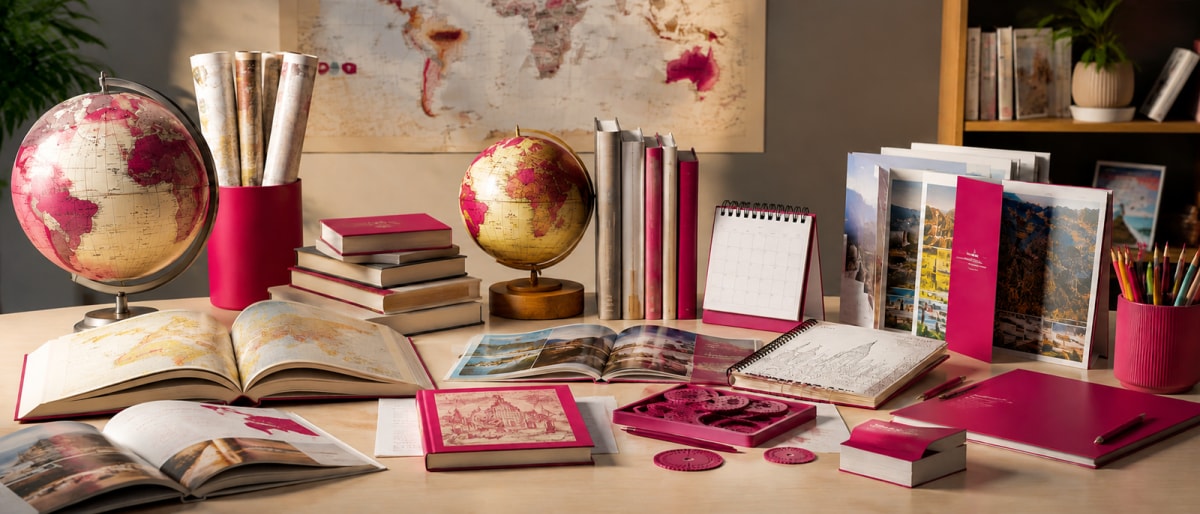
Publishing products include various items such as business cards, brochures, books, illustrated magazines, coloring books, calendars, maps and atlases, globes, and spirographs. Each of these products meets different needs, so they differ from each other in terms of material, size, design, and purpose of use.
This article provides detailed information about the types of publishing products, their areas of use, main features, points to consider when choosing, and proper storage rules.
What products do publishing products include?
Publishing products is a general name for printed materials prepared for various purposes. Each product in this category meets a specific need and is applied in different fields.
Business cards. Prepared for presenting personal and corporate contact information. They play an important role in business meetings, events, and building professional relationships.
Brochures. Allow for the delivery of information about an enterprise, product, or service in a short and systematic form. They are among the most preferred printed products in advertising and promotional activities.
Books. Ensure the delivery of scientific, literary, and educational information to the reader. They are considered one of the main sources of information in the field of education and personal development.
Illustrated magazines. Periodicals where photographs and articles are presented together. They can cover topics such as fashion, technology, automotive, sports, and others.
Coloring books. Support the development of creative skills. In addition to children, there are also albums prepared for adults on various topics.
Maps and atlases. Help in learning geographical knowledge and comparing different territories. They are widely used in the teaching process and when planning travel.
Globes. Reflect a three-dimensional model of the Earth. They are often used in geography lessons and for educational purposes.
Spirograph. A creative tool designed to create various geometric figures and decorative patterns. It helps to develop children's imagination and strengthen drawing skills.
Calendars. Prepared for tracking dates, planning, and organizing daily tasks. Thanks to different size and design options, they can be easily used both at home and in the work environment.
What types are business cards divided into?
Business cards are one of the important elements of business communication. They serve to present personal or corporate information in a short, neat, and professional form. Since they play an important role in forming a first impression, the quality of the material, design, and print level are of great importance. Depending on the purpose of use, business cards are prepared in different types.
Standard business cards. These are the most common models. Name, surname, position, phone number, email address, and company information are presented briefly on these cards.
Matte business cards. Create an elegant look due to their non-glossy surface. They are widely preferred in the business environment because the text is easier to read.
Glossy business cards. Show colors more vividly and easily attract attention. This type is more common in advertising and promotional business cards.
Laminated business cards. More resistant to moisture, scratches, and daily use due to a special protective coating. They are considered a practical choice because they maintain their quality for a long time.
Double-sided business cards. Allow information to be placed on both sides. Contact details can be presented on one side, and the field of activity or logo on the other.
What are brochures used for?
Brochures are publishing products prepared to deliver information to the reader in a short and clear form. Enterprises, government agencies, educational organizations, and various companies make extensive use of these printed products to promote their activities. The volume of content, number of pages, and folding form are determined according to the purpose of the brochure.
Advertising brochures. Prepared to promote products and services, and to provide information about campaigns and special offers. They are one of the effective advertising tools that attract the attention of potential customers.
Information brochures. Provide more detailed information about an enterprise, project, or service. Hospitals, banks, government agencies, and educational institutions often resort to this type.
Tourism brochures. Bring together information about cities, sights, hotels, and tourist routes. They are considered a useful source of information for people planning travel.
Event brochures. Present the program, speeches, and organizational information to participants during conferences, exhibitions, seminars, and other events. These publications create conditions for easier tracking of the event.
What types of books are there?
Books are publishing products that play an important role in preserving knowledge and passing it on to future generations. They are prepared taking into account different age groups and areas of interest. The subject, content, and purpose constitute the main distinguishing features of books. A properly chosen book contributes to both gaining information and broadening one's worldview.
Fiction books. Cover literary works such as novels, stories, novellas, and poetry. They develop the reader's imagination and have a positive effect on the formation of artistic taste.
Scientific books. Present research, theoretical knowledge, and scientific results related to various fields of science. These publications are widely featured in universities, libraries, and research centers.
Textbooks. Prepared in accordance with curricula and support the gradual mastery of topics. They are considered one of the main teaching aids at all levels from school to higher education institutions.
Encyclopedias. Combine systematized information on various fields. They are considered a reliable source for researchers and readers who want to gain additional knowledge.
Children's books. Prepared taking into account age characteristics. Colorful illustrations and simple texts help form reading habits in children.
For what purposes are illustrated magazines prepared?
Illustrated magazines are periodicals that bring together articles, photographs, and various visual materials. Since they present information in an attractive form, they are read with interest by different age groups. Depending on the topic, they can be both educational and entertaining.
Fashion magazines. Provide information about clothing, accessories, cosmetics, and seasonal trends. New collections and style examples are among the main topics of these publications.
Technology magazines. Deliver news about electronic devices, software, and innovative solutions to readers. Product comparisons and reviews also occupy a large place in these magazines.
Automotive magazines. Provide information about new car models, technical specifications, and innovations in the automotive market. They are considered one of the interesting publications for car enthusiasts.
Tourism magazines. Share useful information about different countries, sights, and travel routes. They are a good source of information for those who want to discover new destinations.
Children's magazines. Rich in fairy tales, educational articles, games, and puzzles. They are among the publications that support the learning process in an entertaining way.
What are coloring books used for?
Coloring books are publishing products prepared for the development of creativity and the effective spending of leisure time. Presented on various topics, these albums not only develop children's manual skills and imagination but are also considered an interesting activity for adults. There are various options according to age group and purpose of use.
Children's coloring books. Cover animals, plants, vehicles, fairy tale characters, and other topics. They are a favorable choice for learning colors and developing creative skills.
Educational coloring books. Combine letters, numbers, geography, and nature topics with coloring tasks. They make the learning process of preschool children more interesting.
Anti-stress coloring books. Prepared for adults and consist of complex patterns. They create conditions for concentration, engaging in creativity, and making useful use of free time.
Creative albums. In addition to coloring, they also include various tasks, sketches, and free drawing pages. They are among the publications that have a positive effect on the development of imagination.
What types are maps and atlases divided into?
Maps and atlases are publishing products prepared for learning geographical information and comparing different territories. These publications are widely featured in educational institutions, libraries, and scientific research. Depending on their content, they are divided into several types.
Physical maps. Show mountains, rivers, lakes, oceans, and other natural geographical objects. They form a general idea about the relief.
Political maps. Reflect state borders, capitals, and large cities. They are a suitable choice for learning the location of world countries.
Road atlases. Provide information about highways, roads, and settlements. They are considered one of the useful sources when planning travel.
Educational atlases. Prepared in accordance with school and university programs. They are rich in maps and explanations that support easier mastery of topics.
Why are globes chosen?
Globes are teaching aids that reflect a three-dimensional model of the Earth. Compared to maps, they show the location of geographical objects in a more realistic form. They are among the products often found in schools, universities, and libraries.
Physical globes. Present mountains, oceans, rivers, and other natural objects in different colors.
Political globes. Show the borders of countries, capitals, and cities. They are convenient for learning the location of world states.
Illuminated globes. In addition to their educational function, they also have a decorative appearance. They are chosen as an interesting interior element in offices and libraries.
Decorative globes. Prepared in classic and modern designs. They are considered one of the accessories that complete the interior of work and living spaces.
What is a spirograph and how is it used?
A spirograph is a creative set designed to create various geometric figures, symmetrical patterns, and decorative ornaments. Thanks to the gears and templates included in the set, complex-looking figures can be drawn in a short time. This tool both supports the development of children's creative skills and creates an interesting activity for those interested in drawing and design.
Classic spirograph sets. Consist of gears of different sizes and circular templates. They allow for the preparation of different geometric patterns.
Spirograph sets for children. Have a simpler structure and are easy to use. They have a positive effect on the formation of creative skills.
Multifunctional sets. In addition to spirograph elements, they also include stencils, rulers, and other drawing tools. They are considered a favorable choice for the preparation of various creative projects.
What types of calendars are prepared?
Calendars are publishing products prepared for tracking dates and planning daily tasks. Different size and design options allow them to be used for individual and corporate purposes. Modern calendars are chosen not only for their practical function but also for their decorative appearance.
Wall calendars. Since they are prepared in a large size, dates are easily visible from a long distance. They are among the most used models in homes and offices.
Desktop calendars. Placed on the desk and make daily planning easier. They are valued as a functional solution in the office environment.
Pocket calendars. Since they have a small size, they are easily carried. They are a suitable option for users who want to quickly check date information during the day.
Planner calendars. In addition to dates, they provide additional sections for notes, meetings, and important tasks. They help to manage the work schedule more effectively.
What points should be paid attention to when choosing publishing products?
When choosing publishing products, it is important to pay attention not only to appearance but also to quality and purpose of use. A correct choice allows for more comfortable use of the product for a longer time.
Quality of material. The thickness of the paper and the surface structure are among the main factors affecting the durability of the product.
Print quality. Text should be clear, and images should be printed accurately. Quality printing makes the overall appearance of the product more attractive.
Size and format. When choosing a business card, brochure, atlas, or calendar, it is more appropriate to prefer a size suitable for the purpose of use.
Binding and preparation quality. When books and magazines are prepared with a strong binding, they remain suitable for use for a long time.
Design. Neat placement of information increases readability and completes the aesthetic appearance of the product.
How to store publishing products properly?
The quality of publishing products depends directly on storage conditions. Printed products protected in the right environment retain their shape and appearance for a long time.
Books. It is recommended to place them in a vertical position on dry and ventilated shelves.
Business cards. When stored in special cardholders or boxes, bending and scratches are prevented.
Brochures and magazines. Storing them on a flat surface or in folders helps them stay neat.
Maps and atlases. It is appropriate to protect large maps without folding. Atlases can be stored on a bookshelf.
Spirograph sets. It is recommended to keep them in their own box so that small parts are not lost.
Conclusion
Publishing products occupy an important place in education, advertising, business activities, and various areas of daily life. Although business cards, brochures, books, illustrated magazines, coloring books, maps and atlases, globes, spirographs, and calendars are products that meet different needs, each of them contributes to the presentation of information and the facilitation of the user's daily activities.
Knowing the features and areas of use of these products helps to make the right choice. At the same time, publishing products stored in suitable conditions retain their quality for a longer time and provide better results in use.
Comments0
Be the first to comment
Share your thoughts on this article