

School Supplies Selection Guide
School supplies are an integral part of the learning process. The efficient organization of lessons, completion of practical tasks, creative activities, and daily school life are made easier with the help of these products. Students, teachers, and educational institutions benefit from various school supplies for different purposes.
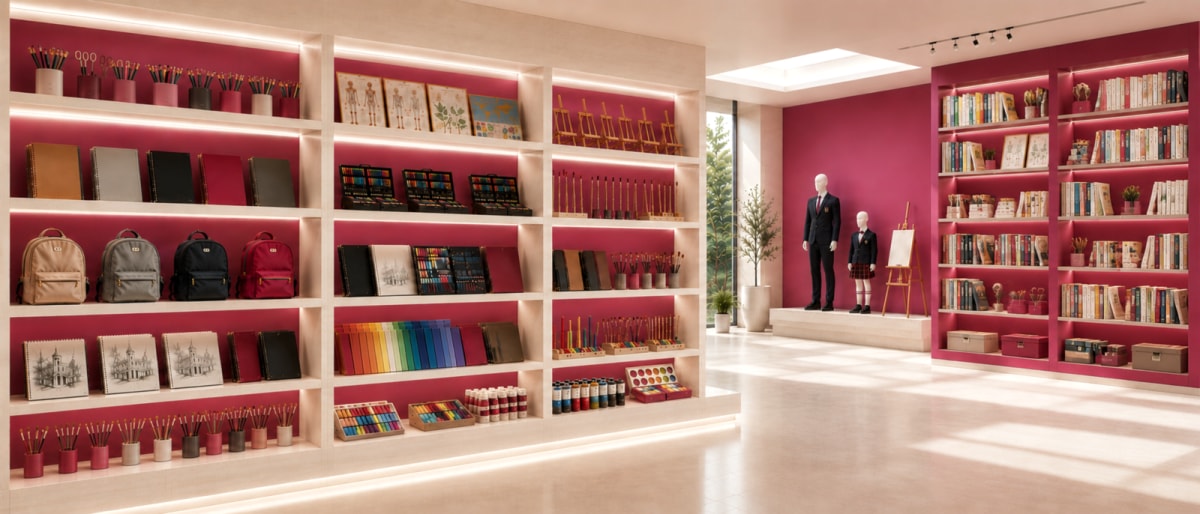
School supplies category includes notebooks, school bags, school uniforms, educational posters, skeletons, easels, pointers, art sets, drawing albums, colored paper and cardboard, counting rods, paintbrushes, modeling clay (plasticine), and paints. Each product is designed for a specific aspect of education. Their material, size, function, and intended use are their main distinguishing features.
In this article, you will learn about the main types of school supplies, their areas of use, points to consider when choosing, storage rules, and useful information related to this category.
What products do school supplies cover?
School supplies cover a wide group of products used in the lesson process, laboratory exercises, art activities, and various educational events. Each of these tools performs a different function and supports the learning process across various subjects.
Notebooks. Designed for writing, notes, assignments, and exercises.
School bags. Facilitate the carrying of school supplies and help keep them organized.
School uniforms. Designed according to the dress code set by educational institutions.
Educational posters. Visual teaching materials that help explain topics more clearly.
Skeletons. Used in biology and anatomy classes to study the structure of the human body.
Easels. Serve to keep a canvas or album in a stable position during art classes.
Pointers. Intended for indicating information on boards, maps, or posters.
Art sets. Bring together the supplies needed for various creative works.
Drawing albums. Used for preparing sketches, drawings, and various creative tasks.
Colored paper and cardboard. Widely used in crafts, applied arts, and projects.
Counting rods. Considered a practical tool for teaching mathematical operations in primary grades.
Paintbrushes. Allow for even application of paint to a surface.
Modeling clay (plasticine). Used for making figures and developing creative skills.
Paints. Intended for painting, decorative work, and various artistic activities.
What to look for when choosing notebooks and school bags?
Notebooks and school bags are among the most used school supplies every academic year. The right choice increases daily comfort, helps protect school materials, and allows for long-term use.
Notebook page type. Lined, grid, dotted, or blank pages are considered suitable for different subjects. The choice should be made according to the curriculum.
Paper quality. Sheets with a smooth surface make writing look neater. Preventing ink from bleeding through to the back page is also an important feature.
Cover durability. A high-quality cover helps protect the notebook for a longer time during daily use.
Number of pages. Choosing the appropriate thickness considering the volume of the lesson can prevent the need for additional notebooks later.
School bag size. The volume of the bag should be appropriate for the student's age and the number of supplies they carry.
Shoulder straps. Wide and adjustable straps help distribute the load more evenly.
Internal compartments. Having separate compartments makes it easier to organize books, notebooks, and other school supplies.
Material quality. Bags made of water-resistant and durable fabric are considered more long-lasting for daily use.
What products are included in art supplies?
Art supplies are the main tools used for developing creative skills. These products are widely used in schools during art classes, various projects, and crafts.
Art sets. Kits where various supplies are presented together. They are considered a practical choice for creative activities at school and home.
Drawing albums. Used for preparing sketches, drawings, and various artistic works. Different size options are available.
Paintbrushes. Differ by bristle type and size. Models suitable for watercolor, gouache, and other types of paint are produced.
Paints. Watercolor, gouache, acrylic, and finger paints are among the most common types of paint in schools. Each is designed for different techniques.
Modeling clay (plasticine). Used for making 3D figures and developing manual skills. Presented in various color sets.
Colored paper and cardboard. Considered one of the main materials for applied arts, model making, cut-and-paste tasks, and creative projects.
For what purpose are educational posters, skeletons, and easels used?
In the teaching process, some supplies are used as visual aids that help explain topics more clearly. Educational posters, skeletons, and easels facilitate the presentation of theoretical knowledge in a visual form. These products are widespread in schools, courses, and various educational centers.
Educational posters. Visual materials where main topics by subject are explained with diagrams, pictures, and tables. They create conditions for easier comprehension of information in classrooms.
Anatomical skeletons. Prepared for studying the structure of the human skeleton in biology and anatomy classes. Models of different sizes are chosen according to the educational purpose.
Easels. Used for placing a drawing album, canvas, or board in a stable position. Height-adjustable models are widely applied both in schools and art studios.
Portable easels. Have a lightweight construction. Considered suitable for outdoor art classes and exhibitions.
Stationary easels. Intended for long-term use due to their more robust structure. Usually used in art classrooms and workshops.
Why are counting rods and pointers used?
Counting rods and pointers are auxiliary tools used in the teaching of various subjects. They serve to explain topics more clearly, develop students' practical skills, and organize the lesson process more efficiently.
Counting rods. Mainly used in primary grades for teaching mathematical operations. Addition, subtraction, grouping, and simple calculations are explained more easily with this tool.
Colored counting rods. Facilitate the comparison of numbers and the mastery of mathematical concepts thanks to different colors.
Pointers. Used to indicate certain parts on boards, maps, posters, and presentation materials.
Telescopic pointers. Can be used comfortably on boards of different sizes because their length can be adjusted.
Wooden and plastic models. Differ by the material they are made of. Both variants are widely applied in the teaching process.
What points are important when choosing school uniforms?
School uniforms are one of the main types of clothing students wear in the daily lesson process. A properly chosen uniform increases freedom of movement, maintains a sense of comfort throughout the day, and is suitable for long-term use. Material quality, size fit, and seasonal suitability are the main criteria to consider when choosing.
Fabric composition. Uniforms made of breathable materials that ensure air circulation are considered more suitable for daily use.
Size fit. Clothing chosen according to body structure does not restrict movement and creates comfort during lessons.
Strong seams. High-quality stitching helps the uniform maintain its appearance for a long time.
Easy care. Fabrics that wash quickly, do not lose color, and are easy to iron facilitate daily use.
Seasonal choice. Lightweight fabrics are preferred for hot weather, and uniforms made of thicker materials are preferred for the cold season.
How to store school supplies properly?
Proper storage of school supplies extends their lifespan and ensures they remain ready for daily use at all times. It is considered more appropriate to choose a protection method according to the characteristics of each product.
Notebooks and drawing albums. When stored on a flat surface, the probability of pages bending and covers being damaged decreases.
Paints and modeling clay. It is recommended to store them in a dry, cool environment after closing the lids. This helps prevent drying and quality changes.
Paintbrushes. Cleaning after use helps maintain the brush's shape and extend its lifespan.
Colored paper and cardboard. When kept away from humidity, the surface remains smooth and does not deform.
School bags. Regular cleaning both preserves their appearance and extends their lifespan.
Educational posters. Storing them without folding or in special folders reduces the risk of damage.
What mistakes should be avoided when buying school supplies?
When choosing school supplies, focusing only on appearance does not always yield the right result. It is possible to make a more successful choice when the product's quality, safety, and intended use are evaluated together.
Choosing age-inappropriate products. It is important to prefer the variant of each supply suitable for the user's age.
Putting quality in the background. Low-quality products can become unusable in a short time.
Not considering the curriculum. Some supplies are required only for certain subjects or grades.
Not paying attention to material characteristics. Products that are safe for health and comply with quality standards are considered more appropriate.
Not considering storage conditions. Supplies that are not protected properly can be damaged faster and become unusable.
Conclusion
School supplies constitute an integral part of the teaching process. Notebooks, school bags, school uniforms, art supplies, educational posters, skeletons, easels, counting rods, and other tools serve to organize various lessons more efficiently.
Learning about product features in advance makes it easier to make a choice according to needs. School supplies that are stored properly and used according to their purpose maintain their quality for a longer time and have a positive impact on the comfortable and efficient organization of the teaching process.
Comments0
Be the first to comment
Share your thoughts on this article