

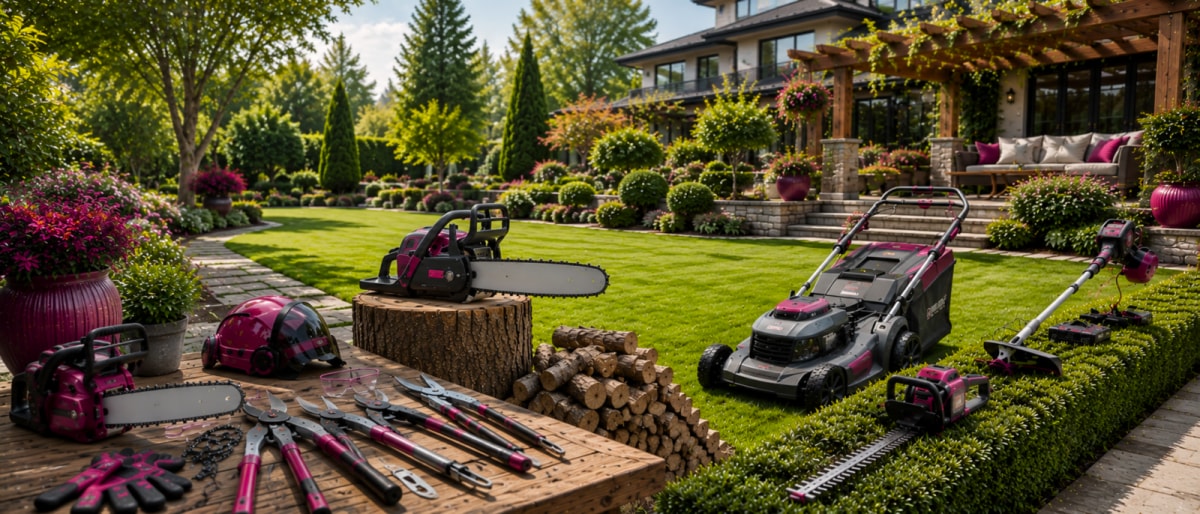
How to Choose Cutting and Mowing Equipment for the Garden?
For garden and yard work to be done comfortably, safely, and efficiently, choosing the right cutting and mowing equipment is essential. There are various tools for pruning trees, shaping shrubs, mowing grass, and other landscaping tasks. These equipment differ based on engine type, power, functions, and intended use.
Electric, gasoline, and battery-powered models are produced to meet various needs. While lightweight and quiet models are sufficient for small gardens, more powerful machinery is preferred for large areas. Engine power, blade quality, safety systems, and ergonomic design directly affect the tool's productivity and ease of use.
This article provides information on the types of cutting and mowing garden equipment, their key features, selection criteria, safe usage rules, and proper maintenance methods.
What are the cutting and mowing equipment for the garden?
Cutting and mowing tools used for garden work serve different purposes. Choosing the right tool not only improves the quality of work but also helps save time and energy.
Chainsaws
Chainsaws are used for cutting trees, pruning thick branches, and preparing firewood. Electric, gasoline, and battery-powered models are available. Electric and battery models are more suitable for small gardens, while gasoline models are better for heavy-duty work.
Lawn Mowers
Lawn mowers are used to keep the grass cover neat. Models with various cutting widths and height adjustments are available. Gasoline models are more convenient for large areas, while electric and battery variants are better for small plots.
Trimmers (Brushcutters)
Trimmers are used in narrow areas where lawn mowers cannot reach, along fence edges, and around tree bases. They are effective in clearing both thin grass and weeds.
Hedge Trimmers
Hedge trimmers are designed for shaping decorative shrubs and live fences. Electric, battery, and gasoline models are chosen according to different usage needs.
Pruning Shears
Pruning shears are used for cutting thin to medium-thickness branches. High-quality steel blades create clean cuts, and ergonomic handles make long-term work more comfortable.
Loppers
Thanks to their long handles, loppers allow for cutting high and thick branches with less physical effort. They are widely used, especially when pruning fruit trees.
What are the main features of cutting and mowing equipment?
Cutting and mowing equipment selection requires attention not only to the product type but also to its technical specifications. Engine type and power, blade quality, weight, safety systems, and ergonomic design directly affect the tool's productivity, ease of use, and service life.
Engine Type
Garden equipment is mainly equipped with electric, gasoline, or battery engines. Electric models are known for their quiet operation and simple maintenance. Gasoline models are more suitable for large areas and professional use due to their high power. Battery models allow for free movement and have been significantly improved in recent years in terms of performance, energy efficiency, and runtime.
Engine Power and Performance
Engine power determines how efficiently the tool processes thick branches, dense grass, and difficult areas. A model with appropriate power prevents engine overload, reduces energy consumption, and allows for more comfortable work. Medium-power models are suitable for household use, while high-performance models are more appropriate for intensive work.
Blade and Chain Material
The material from which the blade and chain are made affects cutting quality and the tool's service life. Blades made of high-carbon steel stay sharp longer and are more durable. Models with rust-resistant coatings work more reliably in humid environments. For chainsaws, the quality and proper adjustment of the chain are essential for safe and efficient use.
Bar Length and Cutting Dimensions
Bar length for chainsaws and cutting width for lawn mowers should be chosen according to the work to be done. Short bars are more comfortable for pruning. Long bars provide an advantage in cutting large trees. While a wide cutting width speeds up work in large areas, it can make the tool difficult to maneuver in narrow spaces.
Ergonomics and Safety
Modern garden equipment is equipped with ergonomic handles, anti-vibration systems, and balanced construction. Chain brakes, protective covers, safety locks, and automatic stop systems minimize the risk of accidents, creating a safer and more comfortable user experience.
What should be considered when choosing cutting and mowing equipment?
When choosing cutting and mowing equipment, the type of work, size of the area, vegetation, frequency of use, and product quality should be considered. The right choice simplifies the work process, increases safety, and ensures long-term use of the tool.
Purpose of Use
First, determine what the tool will be used for. A chainsaw is the best choice for cutting trees, a lawn mower for mowing grass, and a hedge trimmer for shaping decorative shrubs and live fences.
Garden Size
Electric or battery models are sufficient for small backyard areas. In large areas, gasoline models offer higher productivity and the ability to work continuously.
Vegetation
Lightweight models are sufficient for thin branches and soft grass. For clearing thick branches and dense weeds, equipment with a more powerful engine should be preferred.
Frequency of Use
Household-type models are sufficient for seasonal use. For continuous and intensive work, models made of professional, durable materials are more appropriate.
Budget and Quality
When choosing, it is important to pay attention not only to the price but also to the product quality, warranty period, and service options. Although high-quality equipment may be more expensive initially, it is considered a more cost-effective choice in the long run.
How to choose a chainsaw?
When choosing a chainsaw, engine power, bar length, chain quality, and safety features are considered the main criteria. A correctly chosen model allows for faster and safer work, while also achieving more precise results.
Which work is bar length suitable for?
Bar length determines the size of trees and branches a chainsaw can cut. Short bars are easier to maneuver for pruning. Medium-length bars are sufficient for most garden work. For cutting large trees, models equipped with long bars should be preferred.
What does engine power determine?
Engine power is one of the main indicators determining the tool's productivity. A powerful engine cuts thick branches and large trunks more easily, speeds up the work process, and reduces physical load. For small backyard areas, medium-power models are considered quite efficient.
Why is chain quality important?
A high-quality chain creates cleaner and more precise cuts, dulls less quickly, and increases the tool's productivity. Proper tensioning, timely sharpening, and regular lubrication of the chain ensure safety and extend service life.
Safety Features
Chain brakes, safety locks, and anti-kickback systems significantly reduce the risk of accidents. These features create a safe working environment for both professional and beginner users.
What features are important when choosing a lawn mower, trimmer, and hedge trimmer?
When choosing a lawn mower, trimmer, and hedge trimmer, the size of the area, cutting width, blade quality, and additional features should be considered. A correctly chosen model helps the work be done faster and more neatly.
Which model is suitable for small and large areas?
Electric and battery lawn mowers are a practical choice for small backyard areas. In large areas, gasoline and self-propelled models provide high productivity and the possibility of long-term use.
Cutting Width and Height
As the cutting width increases, mowing large areas takes less time. Height adjustment allows for maintaining the grass cover according to the season and purpose of use.
Grass Collection Basket
A grass collection basket prevents mown grass from scattering over the area and makes subsequent cleaning work much easier. This feature saves time and maintains the neat appearance of the garden.
Difference between pruning shears and hedge trimmers
Pruning shears are used for cutting thin branches, flowers, and young shoots. Hedge trimmers are designed for shaping decorative shrubs and live fences. Since both tools have different functions, the choice should be made according to the work to be done.
Blade Material and Ergonomic Handle
Blades made of high-carbon and stainless steel stay sharp for a long time and are resistant to wear. Ergonomic handles reduce hand fatigue during long-term use, facilitate control, and allow for more comfortable work.
How should safe use and proper maintenance of cutting and mowing equipment be carried out?
Proper use of cutting and mowing equipment increases both safety and their service life. Checking the technical condition before starting work, using protective equipment, and regular maintenance ensure the reliable operation of the tool.
What checks should be carried out before starting work?
Before starting work, the condition of the blade or chain, fastening parts, electric cable, battery, or fuel system should be carefully checked. If any malfunction is detected, the tool should not be used until the problem is resolved.
What protective equipment should be used?
Using safety glasses, gloves, and sturdy shoes is essential during work. Using ear protection is recommended when working with noisy equipment. When working with a chainsaw, protective clothing, cut-resistant trousers, and a face shield provide additional safety.
How should the tool be maintained after use?
After work is finished, the tool should be cleaned, moving parts checked, and lubricated if necessary. Regular maintenance reduces wear on parts, maintains productivity, and prevents malfunctions.
When should blades and chains be sharpened?
Blades and chains should be sharpened in time when cutting quality decreases or the tool does not work as before. Regular sharpening helps achieve more precise cuts, increases work speed, and reduces engine load.
Why is regular technical inspection important?
Periodic inspection of the engine, filter, and other main parts prevents possible malfunctions, ensures reliable operation of the equipment, and extends service life.
What are the most common mistakes when buying cutting and mowing equipment?
A wrong choice causes additional costs and prevents achieving the expected result from the work to be done. Avoiding the following mistakes will help you make a more correct choice.
Choosing a model with the wrong power
Choosing a model with power not suitable for the work to be done can negatively affect the quality of work and energy consumption. Therefore, engine power should be chosen according to the purpose of use.
Preferring cheap and low-quality products
Low-quality products break down faster, create additional repair costs, and are not suitable for long-term use. Tools made of high-quality materials work more reliably and offer a long service life.
Ignoring safety features
Chain brakes, protective shields, safety locks, and other protective systems significantly reduce the risk of accidents. Therefore, special attention should be paid to these features when choosing.
Not performing regular maintenance
Tools that are not cleaned and inspected in time wear out faster, lose their productivity, and the probability of malfunction increases.
Conclusion
Cutting and mowing equipment selection is based on the purpose of use, size of the work area, engine type, safety systems, and product quality. A tool chosen according to the work to be done allows for saving both time and energy, while also ensuring more precise and neat results. Regular technical maintenance and proper use extend the service life of the equipment, reduce the risk of malfunction, and prevent additional costs in the long run. A correctly chosen cutting and mowing tool allows for carrying out gardening and landscaping work in a safer, more comfortable, and productive way.
Comments0
Be the first to comment
Share your thoughts on this article