

How to Choose Indoor and Outdoor Lighting Products?
Lighting products play a crucial role in completing residential, commercial, and outdoor spaces functionally, safely, and aesthetically. Properly chosen lighting not only increases daily convenience but also makes the space more attractive. Furthermore, modern lighting solutions help reduce energy consumption, save on electricity costs, and allow for long-term product use. Therefore, when choosing lighting products, criteria such as the area of use, light intensity, energy efficiency, material quality, and protection features should be considered.
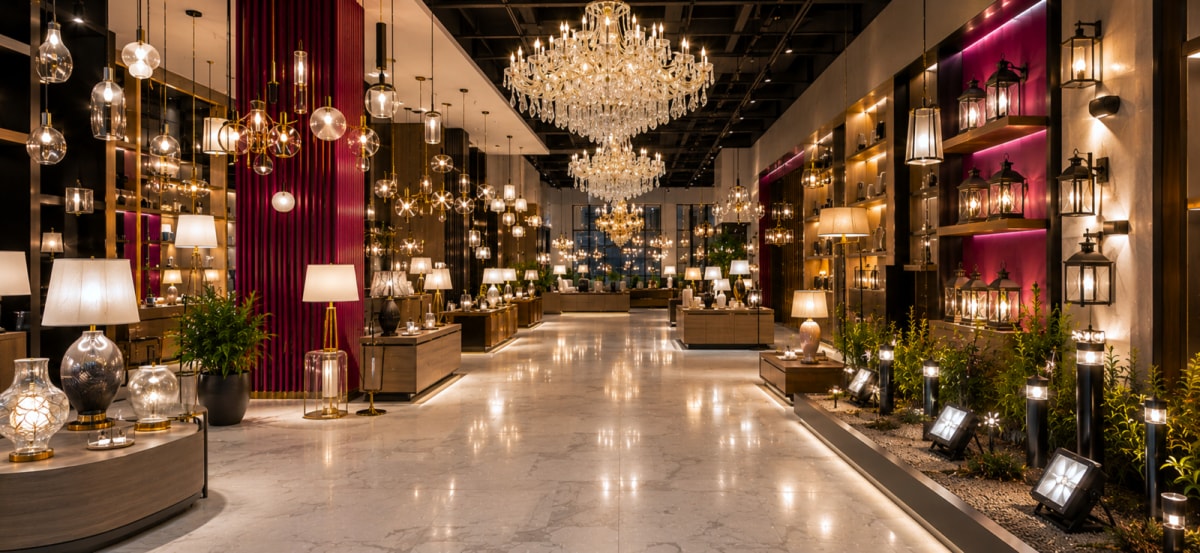
Chandeliers, lanterns, lamps, lighting products, and outdoor and high-power lights are the main product groups used for lighting various spaces. Chandeliers are used as the main light source and decorative element in indoor spaces, lamps meet daily lighting needs, lanterns provide convenient use in gardens, yards, and other outdoor areas, while outdoor and high-power lights ensure safe illumination for building facades, industrial areas, warehouses, and large open spaces.
In this article, you will find detailed information about the types of indoor and outdoor lighting products, their technical specifications, selection criteria, energy efficiency, safe usage rules, and important points to consider when purchasing products.
Why should lighting products be chosen correctly?
Lighting products are one of the essential elements that directly affect the comfort, safety, and overall appearance of a space. Products chosen according to their purpose create better quality lighting, reduce energy consumption, and offer long-term usability. The right choice creates a more comfortable environment in both residential and work settings.
Ease of use. Quality lighting helps perform daily activities more comfortably. Providing an appropriate light level for reading, working, cooking, and other daily tasks reduces eye strain and increases convenience.
Energy efficiency. Modern LED lighting products consume less electricity compared to traditional models. This helps reduce electricity costs in the long run.
Decorative appearance. Lighting is not just a light source; it is an important design element that completes the aesthetic look of the interior and exterior. Properly chosen chandeliers and lamps make the space look more aesthetic and modern.
Longevity. Products made from high-quality materials are more resistant to external influences, do not break down quickly, and maintain their function for a long time.
What are the main types of lighting products?
Lighting products are divided into various categories based on their area of use and function. Since each product is designed for a specific purpose, the environment in which it will be used should be considered during selection.
Chandeliers. Chandeliers are one of the main light sources for residential and commercial spaces. Models produced in various sizes, shapes, and designs can be chosen to suit classic, modern, and minimalist interiors. Chandeliers play an important role in both lighting and decorative appearance.
Lamps. Lamps are used for primary or supplementary lighting. They are produced in LED, filament, decorative, and other types. They offer options for different needs with varying color temperatures, light intensity, and energy consumption.
Lanterns. Lanterns are intended for portable use and are widely used in gardens, yards, camping, garages, and emergencies. Rechargeable, battery-operated, and solar-powered models are preferred for their convenience.
Outdoor and high-power lights. These products are used for lighting building facades, entrances, parking lots, warehouses, and industrial areas. Thanks to their strong light output and weather-resistant construction, they provide reliable lighting in open spaces.
What are the main features of lighting products?
The main features of lighting products directly affect their ease of use, energy consumption, and service life. When choosing a product, it is important to evaluate not only the appearance but also the technical specifications. Lighting products with the right features provide better quality lighting and can be used without problems for a long time.
Light intensity. Light intensity indicates how well the product can illuminate a space. While a medium light output is sufficient for small rooms, products with higher lumen values should be chosen for large halls, warehouses, and open areas.
Color temperature. Color temperature affects the atmosphere created by the light. Warm light (2700–3000K) creates a more comfortable environment, neutral light (4000K) is considered ideal for daily use, and cool light (5000–6500K) is a more suitable choice for offices and workspaces.
Energy consumption. Energy-saving LED technology consumes less electricity and offers a long operating life. This feature helps both save budget and protect the environment.
Material quality. Products made of aluminum, stainless steel, tempered glass, and high-quality plastic are more resistant to heat, impact, and external influences.
Protection degree (IP). The IP rating is of special importance for lighting products intended for outdoor use. A high IP rating protects the product from dust, moisture, and rain, allowing for safer use.
Service life. Modern LED lighting products have an operating life of tens of thousands of hours. This reduces the need for frequent lamp replacement and prevents additional costs.
What should be considered when choosing a chandelier?
Chandelier selection is not limited to interior design. When the chosen model matches the room size, ceiling height, and lighting needs, both aesthetic appearance and functionality are ensured.
Room size. Large chandeliers with many lamps create more effective lighting for spacious rooms. In small rooms, compact models provide an aesthetic look while helping the space appear larger.
Ceiling height. Hanging chandeliers look better in high-ceiling spaces. In rooms with low ceilings, models installed close to the ceiling are more convenient to use.
Material and design. Chandeliers made of glass, metal, crystal, wood, and other materials can be chosen to suit different interior styles. The quality of the material directly affects the aesthetic appearance and longevity of the product.
Number of light sources. The number of lamps on the chandelier should be chosen according to the area of the room. The right number of light sources helps to illuminate the space evenly.
Care and cleaning. Models with an easy-to-clean construction are considered more practical for daily use. Regular cleaning helps maintain the quality of lighting and the aesthetic appearance of the product.
How should lamps be chosen?
Lamp selection should be based on the purpose of use, light intensity, and energy consumption. Properly chosen lamps create comfortable lighting, ensure long-term use, and provide energy savings.
LED lamps. This is the most widely used type of lamp. It is distinguished by its long service life, low energy consumption, and high light quality.
Color temperature. Warm light is more suitable for relaxation areas, neutral light for daily use, and cool light for work and reading spaces.
Power and brightness. The wattage and lumen value of the lamp should match the size of the space to be used. This creates sufficient lighting and prevents excessive energy consumption.
Socket type. Socket types such as E27, E14, GU10, etc., should be chosen according to the lighting fixture. An incompatible socket can make the product impossible to use.
Area of use. Lamps produced for indoor and outdoor use have different characteristics. It is recommended to prefer weather-resistant models for outdoor environments.
How should lanterns and outdoor lights be chosen?
Lanterns and outdoor lights are used for safe and efficient lighting of open spaces. When choosing a product, features such as the environment of use, light intensity, power source, and weather resistance should be considered. A properly chosen model increases safety and allows for long-term use.
Light intensity. Models with medium light intensity are sufficient for small yards and gardens. For large areas, parking lots, warehouses, and industrial sites, powerful floodlights with high lumen values are considered more suitable.
IP protection rating. Products used in outdoor environments must be resistant to rain, dust, and moisture. Models with an IP65 or higher protection level work more reliably in outdoor conditions.
Sensor models. Lights equipped with motion sensors activate only when needed. This feature saves electricity and increases safety in yards and entrance areas.
Solar-powered models. These products, which collect energy during the day and work automatically at night, can be used without wiring and reduce additional energy costs.
Installation location. Outdoor lights should be chosen according to entrance doors, garden paths, garages, facades, and other areas requiring security.
What should be considered for the safe use of lighting products?
Safe use of lighting products is important for both the safety of users and the longevity of the products. Properly installed and regularly maintained lighting systems work more reliably and efficiently.
Proper installation. Electrical connections should be made in accordance with safety regulations, and products should be installed according to the manufacturer's instructions.
Appropriate area of use. Products intended for indoor use should not be used outdoors. Outdoor lighting products must be weather-resistant.
Regular cleaning. Dust and dirt can reduce the quality of lighting over time. Therefore, products should be cleaned and checked periodically.
Electrical safety. Cables, sockets, and other electrical parts should be checked at certain intervals, and faulty parts should be replaced in time.
Timely replacement. Replacing lamps that have weakened light intensity or are causing malfunctions without delay ensures safer use.
Most common mistakes when buying lighting products
When buying lighting products, wrong choices can lead to additional costs and dissatisfaction during use. Avoiding these mistakes helps in choosing the right product.
Focusing only on design. Although the appearance of the product is important, technical indicators such as light intensity, energy consumption, and area of use must also be considered.
Choosing the wrong color temperature. Using very cool light in relaxation areas or excessively warm light in work areas can reduce comfort.
Ignoring the IP protection rating. Products not suitable for outdoor use can break down in a short time due to moisture and dust.
Buying low-quality products. Cheap and low-quality products have a shorter service life and need to be replaced frequently.
Choosing a product with the wrong power. Lighting that does not match the size of the space can cause insufficient light or excessive energy consumption.
Conclusion
Lighting products should be chosen based on the purpose of use, light intensity, color temperature, energy efficiency, material quality, and protection features. When chandeliers, lamps, lanterns, lighting products, and outdoor and high-power lights are chosen correctly, the functionality of the space increases, and a safer and more aesthetic environment is formed. Preferring quality products allows for long-term use, energy savings, and higher performance.
Comments0
Be the first to comment
Share your thoughts on this article