

Information About Combi Boilers: Types and Selection Guide
Combi Boilers are heating equipment used for heating living spaces and providing hot water in households. Combi boilers with different power and technology vary according to the apartment area, heating needs, and usage conditions.
For those who want to get information about combi boilers, the operating principle, heating power, energy consumption, and technical specifications of the devices are of great importance. Choosing the right combi boiler affects not only the temperature of the house but also daily usage comfort and long-term operating costs.
How Does a Combi Boiler Work?
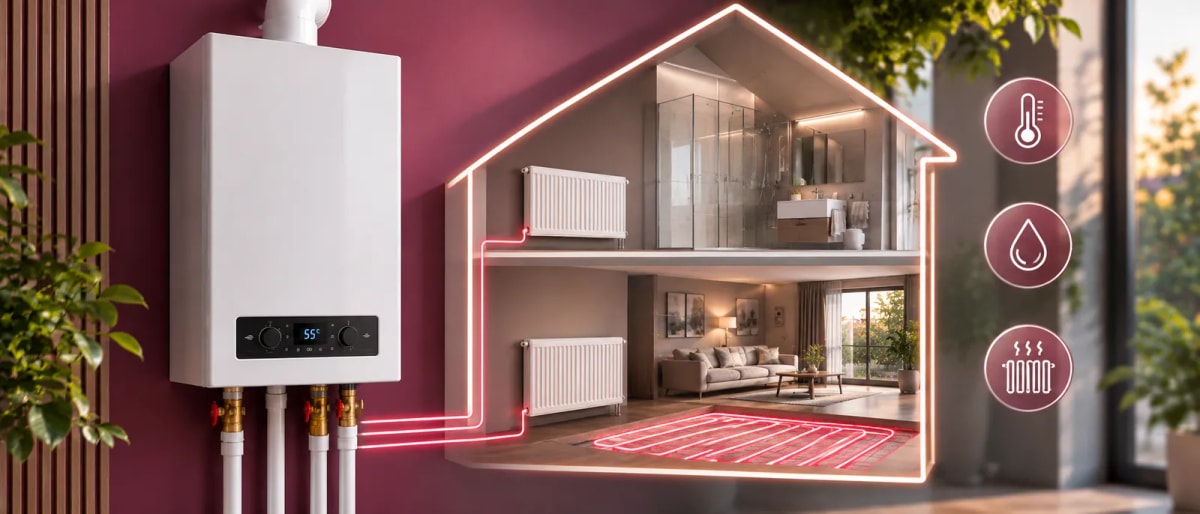
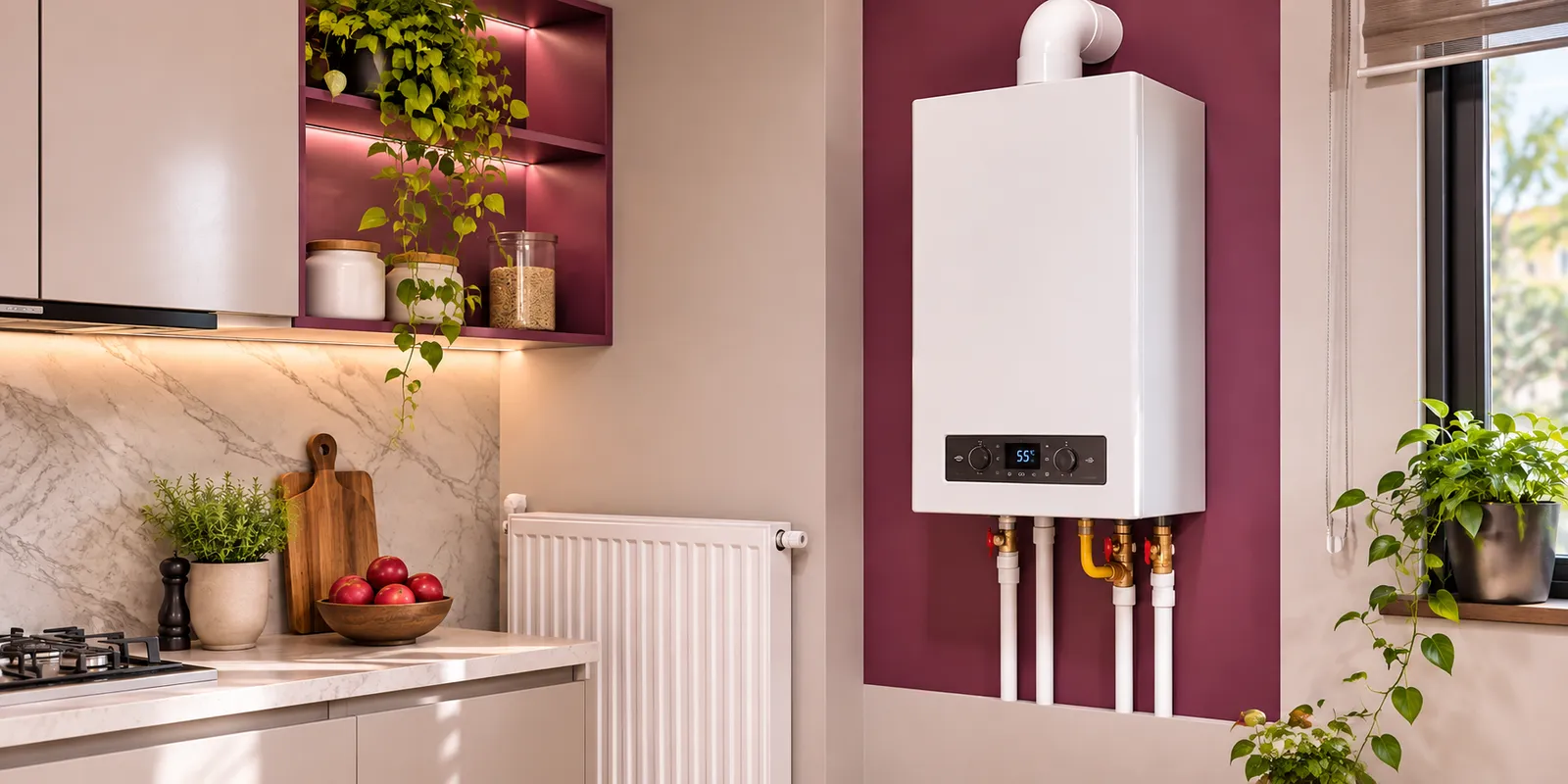
A gas-fired combi boiler transfers the heat generated by the combustion process to water via a heat exchanger. The heated water is distributed to radiators or a suitable underfloor heating system via a circulation pump.
A dual-circuit combi boiler provides both heating for the apartment and hot water for household use. When the hot water tap is opened, the device switches to the water heating mode.
Modern combi boilers may have temperature sensors, an electronic control panel, and various safety systems. These functions help regulate the device's operation, maintain a stable temperature, and ensure safe operation.
What Are the Types of Combi Boilers?
Combi boilers differ according to their operating principle, energy source, and hot water preparation features. Each type has its advantages and application areas.
Combi Type | Feature | Application Area |
Dual-circuit combi | Heating and instant hot water supply | Apartments and private houses |
Single-circuit combi | Mainly heats the heating circuit | Systems with a separate hot water tank |
Condensing combi | Uses part of the heat in flue gases | Systems where energy efficiency is prioritized |
Electric combi | Heats water with electricity | Facilities with suitable electrical infrastructure |
These categories are not mutually exclusive. For example, a dual-circuit gas combi boiler can have condensing technology.
Energy Saving Trust+1
Dual-Circuit Combi
A dual-circuit combi boiler provides both the heating system and hot water for household use without requiring a separate hot water tank.
Due to their compact structure, these devices are widely used, especially in apartments. However, if a large amount of hot water is required in several bathrooms at the same time, the device's performance may not be sufficient.
Single-Circuit Combi
A single-circuit combi boiler is mainly intended for heating the heating circuit. When hot water supply is required in the household, it can be used in combination with a suitable indirect-fired water tank.
Such systems can be considered in houses with high demand for hot water.
Condensing Combi
Condensing technology uses additional heat released during the condensation of water vapor contained in flue gases.
This process helps to increase the energy efficiency of the device. Condensation occurs more effectively, especially when the temperature of the water returning from the heating system to the combi boiler is low.
How Should Combi Boiler Power Be Selected?
When researching information about combi boilers, heating power is one of the most important technical indicators. Power is measured in kilowatts (kW) and indicates the heating capacity of the device.
There are combi boilers on the market with 24 kW, 28 kW, 32 kW, and other power ratings. However, the correct choice should not be based solely on the area of the apartment.
Heating needs are affected by the following factors:
Area of the apartment and ceiling height.
Thermal insulation of walls, roof, and windows.
Number of radiators and their heating capacity.
Climate conditions where the living space is located.
Number of hot water usage points.
Actual heat loss of the house.
For example, the heating demand of two apartments with the same area may be different. In a house with good thermal insulation, the required power may differ because the heat loss is lower.
Choosing an excessively powerful combi boiler does not always create an advantage. The compatibility between the device's minimum modulation power and the actual heating demand is important.
What Parts Do Combi Systems Consist Of?
A combi system is not just a device that heats water. Various components must work together to distribute heat within the apartment and control the temperature.
Component | Function |
Combi device | Generates heat energy and heats water |
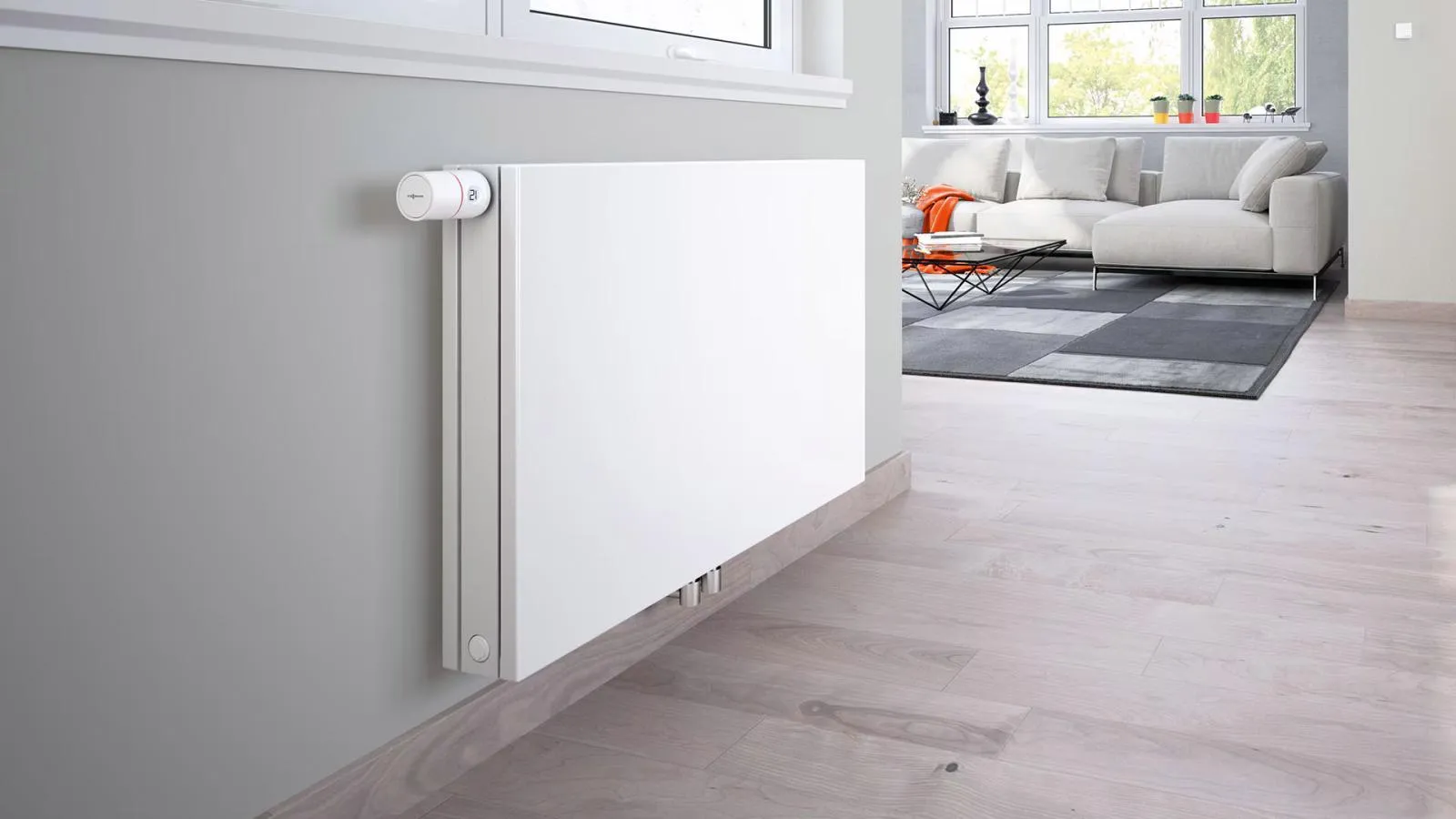
Radiator | Transfers heat to the room |
Circulation pump | Ensures the movement of the heat carrier in the system |
Piping | Delivers the heat carrier to the radiators |
Expansion tank | Compensates for the expansion of water with temperature |
Thermostat | Helps regulate room temperature |
Safety elements | Monitors system pressure and other operating parameters |
In many wall-mounted combi boilers, the pump, expansion tank, and certain safety elements are located inside the device.
When designing a heating system, the size of the radiators, the diameter of the pipes, the circulation of water, and the temperature regime must be considered together.
Should a Combi Boiler Work with Radiators or Underfloor Heating?
Combi boilers can work with radiator and underfloor heating systems. However, there are differences between these systems in terms of heat distribution and the temperature of the water used.
Radiators work on the principle of circulating hot water to heat the room. Their heating capacity depends on size, structure, and water temperature.
In underfloor heating systems, heat is distributed over a wider surface. These systems are usually designed to operate at lower temperatures than radiators.
Since condensing combi boilers can operate more efficiently at lower return temperatures, they can be a suitable choice with a properly designed underfloor heating system.
In houses where both systems are used together, different temperature requirements must be taken into account and an appropriate control system must be established.
Why Does a Combi Boiler Consume Too Much Gas?
The gas consumption of a combi boiler is related to the device's power, heating system, and usage conditions. In some cases, the cause of high consumption is not the combi boiler itself, but heat losses in the apartment.
Main factors increasing gas consumption:
Poor thermal insulation: When heat loss through walls and windows increases, the combi boiler works harder to maintain the required temperature.
Setting the room temperature too high: Increasing the temperature more than necessary affects energy usage.
Unbalanced radiator system: Uneven distribution of heat between rooms can reduce usage comfort.
Delayed technical maintenance: Contamination, malfunction, and poor performance of certain components can negatively affect the efficiency of the heating system.
Room thermostats and programmable control systems help regulate the temperature more accurately.
Energy Saving Trust
What Should Be Considered When Buying a Combi Boiler?
People who want to buy a combi boiler should not make a decision based solely on brand and price. To choose a device suitable for heating needs, its technical indicators and service capabilities should be evaluated together.
First, the heating load of the apartment must be determined. Then, the minimum and maximum heating power, hot water performance, energy efficiency, and control functions of the combi boiler should be considered.
Especially in dual-circuit combi boilers, the amount of hot water produced per minute is an important indicator. In houses where several water points are used at the same time, this feature is of greater importance.
In addition, the availability of spare parts, warranty conditions, and the accessibility of qualified technical service should be considered for long-term use.
Why Does a Combi Boiler Lose Pressure?
The water pressure in the heating circuit of a combi boiler can drop for various reasons. In some cases, this is related to water loss in the system or a technical malfunction.
Possible causes include leaks in radiator connections, problems in piping, malfunction of the expansion tank, and water loss from the safety valve.
The normal pressure range of a combi boiler depends on the device model and system characteristics. Therefore, the indicators shown in the manufacturer's user manual should be followed.
If the pressure drops frequently, instead of constantly filling the system with water, the cause of the problem should be checked by a specialist.
How Is Technical Maintenance of a Combi Boiler Performed?
When getting information about combi boilers, the topic of technical service should also be paid attention to. Regular maintenance helps the device operate safely, detect malfunctions in time, and maintain the efficiency of the heating system.
Annual professional technical inspection is recommended for many gas combi boilers. The exact service interval should be determined according to the manufacturer's instructions.
During the technical inspection, the combustion system, heat exchanger, flue gas exhaust, safety elements, and other components can be checked.
Intervention in the internal parts of gas-fired devices should only be carried out by specialists with appropriate qualifications and authorization.
If a smell of gas is detected, do not use electrical switches, leave the area safely, and contact the gas emergency service.
Frequently Asked Questions About Combi Boilers
Is 24 kW Power Sufficient for a Combi Boiler?
A combi boiler with 24 kW power may be suitable for certain apartments. However, whether this is sufficient should be determined based on the apartment's heating load, radiator system, and hot water demand.
Should a Combi Boiler Be Turned Off at Night?
This depends on the building's thermal insulation, usage regime, and method of temperature control. Reducing the night temperature via a programmable thermostat can help reduce energy consumption in some houses.
Can a Combi Boiler Provide Hot Water to Two Bathrooms at the Same Time?
This depends on the device's hot water performance and water flow rate. In houses with high hot water demand, a system working with a separate water tank may be more suitable.
Is It Normal for a Combi Boiler to Make Noise?
Certain noises can be heard from the pump and other components during the operation of the combi boiler. However, unusual knocking, strong vibration, or noises not previously observed may require technical inspection.
How Can the Service Life of a Combi Boiler Be Extended?
Following the manufacturer's instructions, performing regular technical maintenance, paying attention to the water quality of the system, and checking malfunctions in time help the device operate more reliably.
Comments0
Be the first to comment
Share your thoughts on this article