

What is a Car's VIN Code and How to Check It?
A car's VIN code is an identification number that uniquely identifies a specific vehicle. The VIN (Vehicle Identification Number) in modern cars usually consists of 17 characters and is used to identify the car's manufacturer, model, and certain technical specifications.
Checking a VIN code is used to verify the vehicle's identification data, check its compliance with documents, and research additional information about the vehicle in available databases. Especially when buying a used car, checking VIN information can help in making a more informed decision.
What is a car's VIN code?
The VIN is a unique identification number assigned to a specific car by the manufacturer. Consisting of 17 characters in a standard format, this code distinguishes the car from other vehicles. The structure of the VIN is defined by the ISO 3779 standard.
Car VIN code, the car's VIN code, and the vehicle's VIN code all refer to the same identification system. This number does not contain the entire history of the car, but it is used to identify a specific vehicle in various information systems.
The VIN can be used to determine information about the manufacturer, model, place of manufacture, and some technical specifications. For mobile phones, an IMEI number is used instead of a VIN.
What is the purpose of a VIN code?
The main function of the VIN is to accurately identify a specific car. This number is used for the proper identification of the vehicle during registration, insurance, service, and technical processes.
Based on the VIN, information regarding the car's production features, recalls, and history can also be linked in some information systems.
Where is the car's VIN code located?
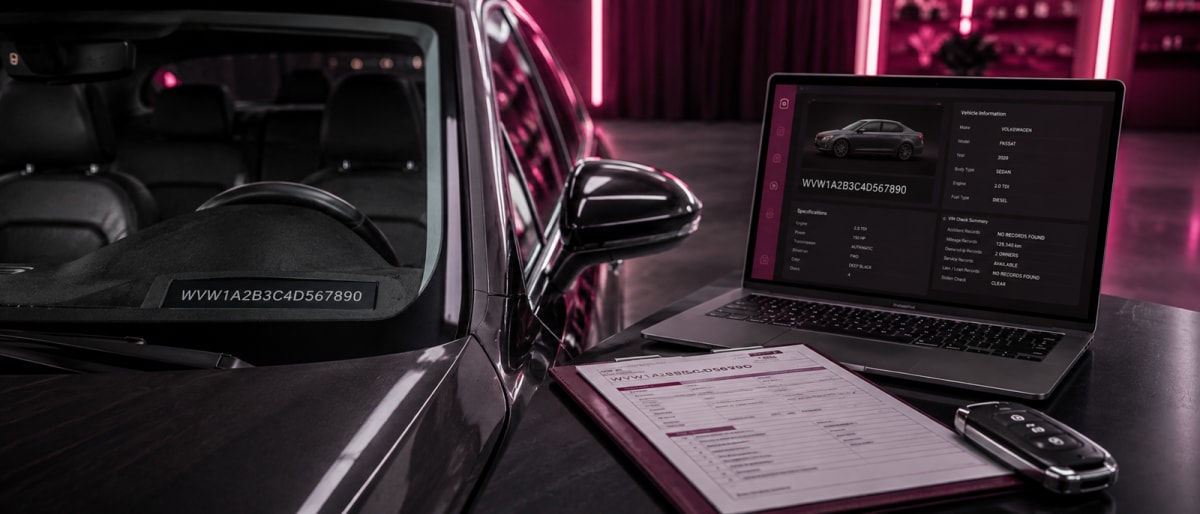
The car's VIN code can be located in different places depending on the make and model. It is most commonly found at the bottom of the windshield and on the driver's door frame. In some models, it can also be located in the engine compartment or other parts of the body.
The VIN is also shown in the car's official documents. Therefore, when looking for the answer to the question where is the VIN code located, it is necessary to compare the information on the car itself with the information in the documents.
Pictures showing the part where the code is located can also make it easier to find.
How is a car's VIN code checked?
To check a car's VIN code, the 17-character number on the car must first be correctly identified. Letters and numbers must be read accurately, as entering even one wrong character can affect the result.
Then, the VIN is compared with the number in the car's documents. Once the match is confirmed, it is possible to perform a search in a VIN decoder or relevant information systems.
When checking a VIN code, it is important to pay attention to what information the source provides. Because not all systems use the same database, and the volume of information provided may vary.
What information can be learned during a VIN check?
As a result of a VIN check, the car's manufacturer, model, place of manufacture, model year, and some technical specifications can be determined.
In systems that provide a data history, records about accidents, service, mileage, registration, and other events may also appear. However, it is not guaranteed that this information is complete for all cars.
For this reason, a VIN result should be evaluated as part of the available information about the car.
What does checking a car by VIN code provide?
Checking a car by VIN code allows you to research available information about a specific car. It is especially useful for comparing the information provided by the seller of a used car with additional sources.
The consistency of the model, production year, and other identification indicators can be checked, and if history data is available, accident and service records can also be researched.
However, a VIN check does not determine the technical condition of the car on its own. The body, engine, transmission, and other systems must be checked separately.
For other stages of checking a used car, you can look at the article "What to Pay Attention to When Buying a Used Car?".
What do the 17 characters of the VIN code mean?
A standard VIN consists of 17 characters and is composed of different parts. The first three characters usually create the WMI part and are used in identification related to the manufacturer.
The following parts can be linked to certain features of the car, and the last part can be linked to the distinguishing serial information of the specific vehicle.
It is not correct to explain the meaning of each character in the VIN in the same way for all brands. Specific coding may depend on the manufacturer.
Which letters are not used in the VIN code?
The letters I, O, and Q are not used in writing the VIN. This helps reduce the risk of confusing them with similar-looking numbers like 1 and 0.
How can the production year of a car be determined from the VIN code?
In some VIN formats, the model year is encoded with a specific character. However, the interpretation of this information may vary depending on the specific car's manufacturer and the applied VIN structure.
Therefore, it is more accurate to compare the year information obtained from the car's VIN code with the indicator shown in the documents. The model year and the actual production date may not be the same.
Is it possible to learn the car's history with a VIN code?
The VIN does not contain the car's history within itself. However, based on it, history records related to that car can be searched in various databases.
Depending on the availability of information, it is possible to find records about service, accidents, mileage, registration, and other events. Some services may also provide photos and auction information.
However, the absence of a record in the database does not necessarily mean that the car is problem-free.
Can accident and mileage information be checked with a VIN code?
In some systems, it is possible to find information related to accidents and insurance events, as well as previous mileage readings, with a VIN code.
However, the absence of information in the system does not prove that accidents or mileage changes never occurred. Therefore, accident and mileage information should be evaluated together with the actual condition of the car and service documents.
How is the car's VIN code compared with documents?
The car's VIN code must be compared character-by-character between the identification number on the car and the VIN in the documents.
One must be careful when checking a car's VIN code. Even a single different letter or number on the VIN should be investigated. If there are several VIN points on the car, their consistency with each other should also be checked.
It is not correct to accept the car or make a purchase decision without determining the reason for the discrepancy.
What does it mean if no information appears in the VIN report?
The fact that no information appears in a VIN check does not mean that the car is accident-free or that its history is completely clean. The information may not have been stored in that system or may be located in another source.
Therefore, after a report with no results, the car's documents, body, mileage, and technical condition should be checked separately.
What is the difference between a VIN check and a technical inspection?
A VIN check investigates the identification of the car and available information and history records.
A technical inspection evaluates the current condition of the car. The condition of the engine, transmission, body, suspension, brakes, and other systems is checked during this process.
These two checks do not replace each other. The fact that VIN information matches does not mean that the car is technically problem-free.
For more detailed information about checking technical parts, you can look at the article "How is a Car's Technical Inspection Conducted?".
How can a fake or altered VIN code be identified?
The fact that the VIN is different in various parts of the car, a different number is shown in the documents, or there are traces of the code being erased or altered can raise suspicion.
Inconsistencies in the appearance of the font and characters, the suspicious state of the identification plate, and traces of physical interference also require attention.
If such a case is discovered, it is more appropriate to have an additional check carried out by a relevant specialist before accepting or buying the car.
How is a VIN code checked in Azerbaijan?
Checking a VIN code in the Azerbaijani market can help in researching available identification and history information about a car. It is important to pay attention to the source and scope of the information provided during this check.
First, the car's VIN code is compared with the documents, then a search is performed in the appropriate information system. The completeness of the results may depend on the source used.
For this reason, when checking a VIN code, it is a more correct approach to compare the obtained information with other documents and the actual condition of the car.
Why is a VIN code important?
Since the VIN is the car's individual identifier, it is used in registration, service, insurance, production, and various technical processes.
When buying a car, it is possible to research additional information about the vehicle through searches such as check VIN code or VIN check. Comparing this information with documents and the results of the car's technical inspection helps to evaluate the condition of the vehicle more accurately. Especially when buying a used car, this approach allows for a more reliable decision.
Frequently Asked Questions
What is a VIN code?
The VIN is an identification number that uniquely identifies the car and consists of 17 characters in a standard form.
Where is the VIN code located?
Depending on the car model, it can be located at the bottom of the windshield, on the driver's door, in the engine compartment, and in other identification areas.
Why is a VIN code checked?
It is used to clarify the car's identification data, check its compliance with documents, and research available additional information.
Is it possible to check a car with a VIN code?
Yes. Depending on the information system used, production, technical, and some history information about the car can be determined.
Is it possible to learn the accident history with a VIN code?
In some databases, records related to accidents and insurance events may appear. However, it is not guaranteed that all events are in the system.
Is it possible to check the mileage with a VIN code?
In some systems, previous mileage readings may be stored. However, the absence of such information does not automatically mean that the real mileage is correct.
Is a VIN code used in phones?
No. The VIN is used for the identification of road vehicles, while the IMEI is used for the identification of mobile devices.
Conclusion
A car's VIN code is the main identification information that uniquely identifies the vehicle. Through the VIN, the car's manufacturer, model, and some technical specifications can be determined, and additional history records can be researched in available information systems.
When checking a VIN code, the accuracy of the code, the compliance of the car and documents, as well as the source of the obtained information should be taken into account. Although checking a car by VIN code is useful, it does not replace a technical inspection and document check.
Especially when buying a used car, evaluating VIN information together with the body, mileage, service documents, and technical diagnostics helps to make a more correct decision.
Comments0
Be the first to comment
Share your thoughts on this article