

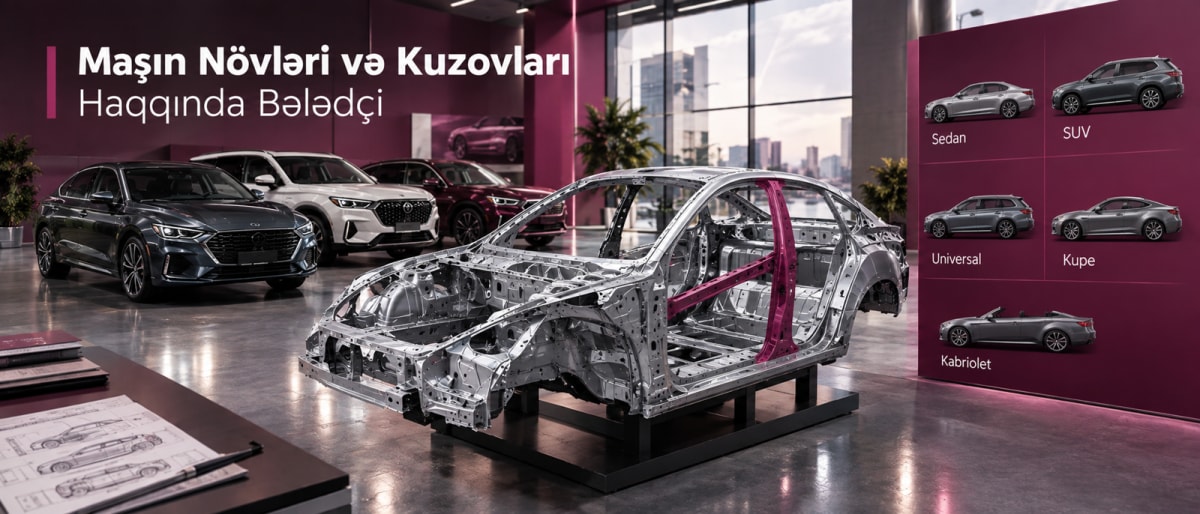
Guide to Car Types and Body Styles
Car types and body styles show how vehicles differ based on their intended use, size, and structure. Different car types such as sedan, SUV, station wagon, coupe, and convertible can be suitable for various driving conditions and usage needs.
When choosing a car, in addition to the body style, one should consider interior and trunk space, driving conditions, fuel consumption, and budget. Car brands and car models help to identify the vehicle more precisely during the selection process.
This guide explains the main car types, what a car body is, and which body styles are more suitable for specific purposes.
What are the types of cars?
Car types can vary based on purpose, construction, and body shape. Passenger cars include sedan, SUV, station wagon, coupe, convertible, hatchback, and other body shapes.
It is important to distinguish one point here: car type, brand, model, and body are not the same concept. For example, Toyota is the brand, Camry is the model, and sedan is the body type of the car.
This is exactly why these indicators are selected separately in ad searches. The brand and model determine the manufacturer and the specific version of the car, while the body shows its structural form.
Users who want to compare different brands, models, and body types based on real offers can view car ads on Tenderyard at https://tenderyard.com/neqliyyat/neqliyyat-vasiteleri/avtomobil.
What does a car body mean?
The body is the main structural part of the car that combines the passenger cabin and the cargo area. Doors, hood, trunk lid, fenders, and other elements are key parts of the body structure.
The car body affects both the exterior appearance and the practicality of the car. The shape of the body is one of the main factors determining the spaciousness of the cabin, trunk area, seating arrangement, and overall dimensions of the car.
For example, while a sedan has a separate trunk compartment, a station wagon has a longer cargo area. In SUV models, a taller body and a high seating position are key features.
What is a sedan car?
A sedan car is a body type that usually has four doors and a trunk compartment separate from the passenger cabin. This structure makes sedans one of the practical choices for daily use.
Sedan cars are widely used for city driving, commuting, and family use. When choosing a sedan model, the car's size, rear seat area, trunk volume, and fuel consumption should be considered.
Small sedans can be convenient for parking and maneuvering in the city. Larger sedans can provide advantages in terms of cabin comfort and comfort on long-distance trips.
What is an SUV car?
An SUV car is distinguished by its high seating position and usually a larger body than sedans. Although some SUV models have a structure more suitable for off-road, not all SUVs are designed for heavy off-road conditions.
When choosing an SUV car, indicators such as ground clearance, drivetrain, body size, trunk volume, and fuel consumption should be compared.
An SUV model can be practical for both city and long-distance use. However, the large body and engine can lead to higher fuel consumption in some models.
How do station wagons differ?
Although station wagons have a structure similar to sedans, they offer a larger cargo area as the roofline extends to the rear.
This body type can be convenient for family use, travel, and people who frequently carry cargo. Folding the rear seats allows for further increasing the volume of the cargo area.
A station wagon can be considered a variant that combines the daily comfort of a sedan with a more practical trunk area.
What is a coupe car?
A coupe car is mainly distinguished by its sporty style and more dynamic body design. Many coupe models use a two-door structure and a lower roofline.
Coupe cars can be interesting for users who prioritize appearance and driving character over practicality. The volume of the rear seats and trunk is more limited than in some sedan models.
A coupe model can also be useful for daily use, but for families and those with large cargo needs, a larger body type is a more practical choice.
What are convertible cars like?
Convertible cars are distinguished by their retractable roof construction. Opening the roof allows for open-top driving.
In these cars, design and driving experience are among the main advantages. In addition, the technical condition of the roof mechanism, trunk volume, and practicality of the rear seats vary depending on the specific model.
When choosing a convertible, not only the appearance but also the working condition of the roof system and maintenance costs should be considered.
What does a car model mean?
A car model is the specific name of a car produced by a certain brand. For example, Toyota is the brand, and Camry is the model.
The same model can be presented with different engines, transmissions, trim levels, and even body variants in different production years.
For this reason, when looking at ads, it is necessary to pay attention not only to the car model name but also to the production year, engine, mileage, trim level, and body type.
What is the difference between car brands and car models?
Car brands indicate the name of the company that produces the car. The model is the specific car offered by that brand.
For example:
Brand → Toyota
Model → Camry
Body → Sedan
Knowing this difference is also useful when searching for car ads. Because there can be different models and body types within the same brand.
What is the difference between an SUV and a sedan?
The main difference between an SUV and a sedan is the body structure and usage character.
A sedan has a lower body and a separate trunk compartment. An SUV usually offers a higher seating position, high ground clearance, and a larger body.
For city use, a sedan can be a more compact and economical choice. For a user who wants a higher seating position and a large cargo area, an SUV may be more suitable.
It is not correct to say generally that “an SUV is better” or “a sedan is better.” The choice depends on where and how the car will be used.
How should a car type be chosen?
The most accurate choice should be based on the daily usage form of the car.
For city use:
compact sedan;
small-bodied cars;
city-oriented SUV models can be considered.
For family and large cargo area:
station wagon;
SUV;
larger sedan models may be suitable.
If design and driving experience are key:
coupe;
convertible models can be looked at.
If high ground clearance and more diverse road conditions are required, it is more appropriate to compare the technical specifications of SUV models.
The main goal is not to find the most popular car type, but to choose the body and model that suits your usage needs.
What else should be looked at when buying a car besides the body type?
The body is only one part of the car selection. Engine type, transmission, fuel consumption, mileage, safety equipment, and technical condition should also be considered.
For more detailed information about engines and energy systems, you can go to the “Guide to Car Engines” article.
Especially when buying a used car, the condition of the body, service history, and technical inspection of the car should be checked separately.
For a more comprehensive checklist regarding car purchase, it would be appropriate to go to the “What to Pay Attention to When Buying a Car?” article.
Frequently Asked Questions
Who is a sedan car suitable for?
Sedan cars can be a practical choice for daily city use, family needs, and long-distance trips.
What should be looked at when choosing an SUV car?
When choosing an SUV, body size, ground clearance, drivetrain, engine, fuel consumption, and trunk volume should be compared.
Is a coupe car suitable for daily use?
Yes, but in some coupe models, the rear seat and trunk area are more limited. Therefore, daily usage needs should be considered in advance.
How do car brands and models differ?
The brand is the name of the manufacturer, and the model is the specific car from that manufacturer. The body type shows the structural form of the car.
Conclusion
Car types and bodies play an important role in selection based on the intended use and practical capabilities of the car. Each of the cars such as sedan, SUV, station wagon, coupe, and convertible offers features suitable for different needs.
Car body, brand, and model are different concepts. Therefore, during selection, car brands, car models, body type, engine, mileage, and technical condition should be considered together.
After identifying the suitable car, you can find the variant that suits your needs more easily by comparing various car ads on Tenderyard based on brand, model, price, mileage, and other indicators.
Comments0
Be the first to comment
Share your thoughts on this article