

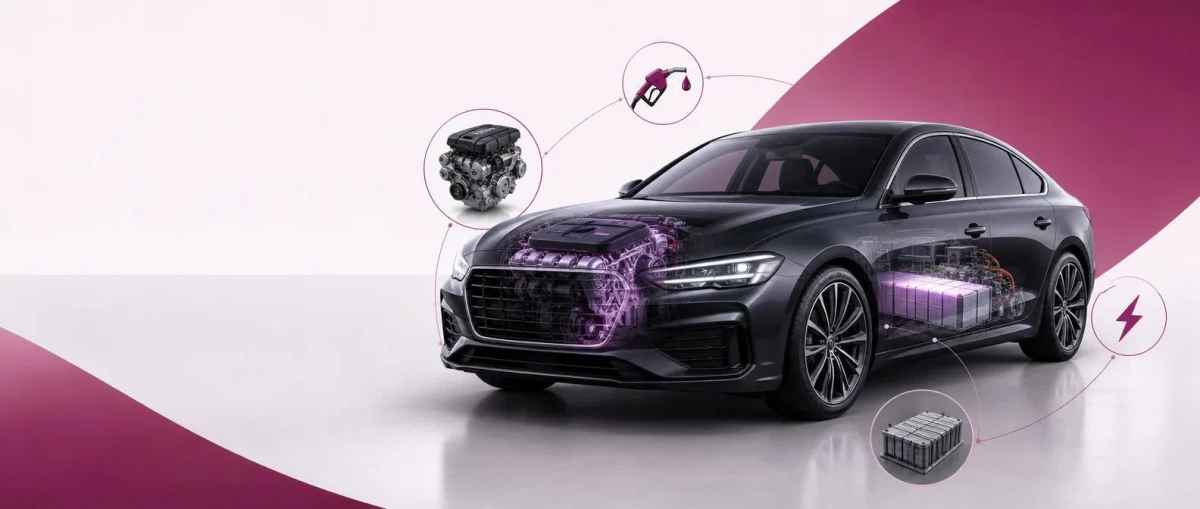
Guide to Car Engines
Car engines are one of the main systems that affect a vehicle's power, fuel consumption, driving characteristics, and maintenance costs. When choosing an engine, it is necessary to pay attention not only to the price of the car but also to its daily purpose and operating costs.
In modern cars, gasoline and diesel engines, hybrid systems that combine an electric motor with an internal combustion engine, and fully electric motors are widely used. Each of these technologies can be suitable for different driving conditions and usage needs.
This guide provides information about the types of car engines, their main features, fuel consumption, areas of use, and points to consider when choosing.
What are the types of car engines?
Car engines are divided into several main groups based on their energy source and operating principle. Gasoline, diesel, hybrid, and electric systems are most common in passenger cars.
In gasoline and diesel cars, internal combustion engines generate energy through the combustion of fuel. Hybrid cars combine an internal combustion engine with an electric motor. In fully electric models, only an electric motor is used for movement.
When determining the engine type, daily mileage, routes used, fuel and energy costs, as well as service availability should be evaluated together.
How does a gasoline engine work?
A gasoline engine converts the energy generated by mixing fuel with air and burning it in cylinders into mechanical movement. Since these types of engines are widespread in passenger cars, it is possible to choose from various brands, models, and engine displacements.
Gasoline cars can be a practical choice, especially for daily city use and drivers covering various distances. However, consumption varies depending on engine displacement, car weight, transmission, and driving conditions.
What are the features of a diesel engine?
A diesel engine works on the principle of fuel ignition due to compressed air. Diesel cars are usually distinguished by high torque at low revolutions and fuel efficiency over long distances.
These features can be an advantage for individuals with high annual mileage who frequently use highways. However, when choosing a diesel car, looking only at fuel consumption is not enough. Service costs, the price of spare parts, and the technical characteristics of the specific engine should also be considered.
Is diesel or gasoline more economical?
The choice between diesel or gasoline depends on how the car is used. For high annual mileage and long distances, a diesel engine can provide an advantage in terms of consumption.
For drivers who cover short distances in the city and are looking for more universal usability, a gasoline model may be more suitable.
When comparing, it is more correct to look at the following indicators together:
fuel consumption;
purchase price;
maintenance costs;
spare parts;
annual mileage;
road conditions used.
In other words, a car that consumes less fuel is not always a cheaper choice.
Who are diesel cars suitable for?
Diesel cars can be an interesting choice for drivers who use their car frequently and cover long distances. Especially with high annual mileage, fuel efficiency can affect overall costs.
Users who mainly cover short distances within the city should separately research the technical characteristics and service requirements of the specific model.
Therefore, when choosing a diesel, the main question should not just be "does diesel burn less?" but "how will I use this car?".
What is a hybrid car and how does it work?
A hybrid car combines an internal combustion engine and an electric motor in the same system. The car's control system can optimize the use of these energy sources depending on driving conditions.
For example, in some hybrid models, the support of the electric motor is felt more at low speeds. As speed and load increase, the internal combustion engine can be engaged. The storage of part of the energy generated during braking in the battery is also one of the main features of this technology.
Not all hybrid systems have the same structure. In classic hybrids, the battery is mainly charged by the movement of the car and regenerative braking. In plug-in hybrids, there may be a larger battery and the possibility of external charging.
What are the advantages of hybrid cars?
Hybrid cars are an interesting choice, especially in city conditions. The participation of the electric system during traffic jams and frequent stop-and-go driving can help optimize energy consumption.
Their main advantages are:
additional support from the electric motor;
lower fuel consumption in some modes;
silent movement capabilities;
use of the fuel engine over long distances;
no need for external charging in some models.
In addition, when buying a used hybrid, the condition of the battery, service history, and the technical state of the hybrid system should be checked separately.
How does an electric car work?
An electric car uses an electric motor and energy stored in a battery for movement. Unlike gasoline and diesel models, it does not need a classic internal combustion engine or fuel.
When choosing an electric car, battery capacity, real driving range, charging speed, and charging infrastructure are among the main indicators.
Having the possibility to charge at home or at work for daily use can make using an electric car more convenient.
What indicators should be checked when buying an electric car?
When choosing an electric model, looking only at the price of the car and the advertised driving range is not enough.
Main indicators:
battery capacity;
real driving range;
charging time;
fast charging capabilities;
battery warranty;
battery health status;
type of charging port;
service availability.
Especially in a used electric car, the condition of the battery should be checked separately. Just as the mileage figure shown on the dashboard does not fully reflect the general technical condition of the car, it is not correct to make a decision based on only one indicator in an electric model.
How to choose the most fuel-efficient car?
When looking for the most fuel-efficient car, in addition to the engine type, the car's weight, body, transmission, and usage conditions should also be considered.
Two cars with the same engine displacement can show completely different consumption due to different weight and aerodynamic structure. Also, the result obtained in city traffic differs from the indicator observed on the highway.
Therefore, when choosing an economical model, the following should be compared:
consumption indicated by the manufacturer;
real usage indicators;
engine power;
car weight;
transmission;
body type;
tire size.
In other words, it is not correct to draw a general conclusion like "diesel burns less" or "hybrid is always more economical".
For more detailed information about the effect of body type on the car's weight and usage, you can look at the "Guide to Car Types and Bodies" article.
What does fuel consumption depend on?
Fuel consumption depends not only on the technical characteristics of the car but also on driving conditions.
The main influencing factors are:
city and highway driving;
speed;
traffic;
car load;
tire pressure;
technical condition of the engine;
use of air conditioning;
driver's driving style;
weather and road conditions.
For example, the same car can consume more fuel or energy when stopping and moving frequently within the city. Driving at a constant speed on the highway can give a different result.
For this reason, in car comparison, it is necessary to look not only at catalog indicators but also at the real usage scenario.
Which engine is more suitable for the city?
Frequent stopping, short distances, and traffic in city use are the main factors affecting engine choice.
Hybrid cars can be an interesting choice in city conditions due to the support of the electric system. Electric models are a practical option for users who have the possibility to charge at home or at work.
Gasoline cars remain a universal alternative due to the wide range of choices. In diesel cars, the technical characteristics of the specific model should be researched in advance, mainly for short-distance city use.
Which car is more suitable for long distances?
One of the main issues on long-distance trips is the availability of energy charging or refueling options.
Since the refueling process is short in gasoline and diesel cars, planning long routes can be simpler. Hybrid models also offer flexibility on long trips thanks to the fuel engine.
In an electric car, it is important to determine the charging stations along the route in advance.
Is a hybrid or electric car more suitable?
The choice between hybrid or electric mainly depends on the daily route and charging possibilities.
For a user who mainly moves in the city and can charge at home or at work, an electric car can be a suitable choice. For people who cover various distances and need less charging planning, a hybrid car is a more flexible alternative.
What costs should be considered when choosing a car?
The purchase price of the car is only part of the total cost of ownership. When you want to buy a car, you also need to calculate future operating costs.
This includes:
fuel or electricity;
maintenance;
oil and filters;
tires;
brake parts;
insurance;
spare parts;
possible repair costs.
In hybrid and electric models, the condition of the battery and energy system can also determine additional cost risks.
How to choose between gasoline, diesel, hybrid, and electric?
Criterion | Gasoline | Diesel | Hybrid | Electric |
|---|---|---|---|---|
Energy source | Gasoline | Diesel | Fuel + electric | Electric |
City use | Suitable | Depends on model | Can be suitable | Can be suitable |
Long distance | Suitable | Suitable | Suitable | Requires charging planning |
External charging | No | No | In plug-in models | Yes |
Main focus | Consumption and service | Mileage and service | Battery and system | Battery and charging |
This table is for general information purposes. When choosing a specific car, the technical specifications of the model should be evaluated separately.
Which car type is more suitable for you?
To simplify the choice, it is enough to look at the daily usage pattern.
For short distances in the city, you can compare gasoline, hybrid, and electric models.
For high annual mileage, diesel and hybrid variants, as well as specific gasoline models, can be considered.
Possibility to charge at home or at work can make an electric car more practical.
For long trips and various routes, gasoline, diesel, and hybrid models can create more flexible choices.
When looking for low daily operating costs, not only the engine type but also the real consumption and service costs of the specific model should be compared.
What else should be considered when choosing a car?
The engine and energy system are only part of the choice. The car's body, transmission, safety equipment, mileage, service history, and general technical condition should also be evaluated.
The main article that explains this topic in more detail is the "What to Consider When Buying a Car?" article.
Frequently Asked Questions
Is diesel or gasoline more economical?
This depends on the car's annual mileage and usage conditions. On long distances, a diesel engine can provide an advantage in terms of consumption, while gasoline models may be more suitable for city and short-distance use.
Does a hybrid car save fuel?
A hybrid system can help reduce fuel consumption in certain driving conditions. The result depends on the car model, city and highway use, and driving style.
Do hybrid cars need to be charged?
Not all hybrids are charged from an external source. In classic hybrid systems, the battery can be charged through the operation of the car and regenerative braking. Plug-in hybrids can be charged externally.
Does an electric car use fuel?
No. A fully electric car uses electricity for movement and does not need classic gasoline or diesel fuel.
Which is the most fuel-efficient car?
This cannot be determined based solely on the engine type. The car's weight, engine, transmission, body, and usage conditions also affect fuel consumption.
Are diesel cars suitable for city use?
They can be suitable, but the choice should be made according to the specific model and usage mode. It is important for people who mainly have short-distance city driving to research the technical characteristics and service requirements of the car in advance.
Conclusion
Car engines differ from each other with different energy sources and operating principles. Gasoline models are distinguished by universal usage possibilities, diesel cars by efficiency on long distances, hybrids by the combination of electric and fuel systems, and electric cars by moving entirely on electricity.
The most correct approach when choosing an engine is not to look only at fuel consumption. Daily mileage, usage conditions, purchase price, maintenance, energy costs, and charging possibilities should be evaluated together.
After determining the suitable engine type, it is possible to compare various ads by price, brand, model, mileage, and other features in the Tenderyard Car category.
Comments0
Be the first to comment
Share your thoughts on this article