

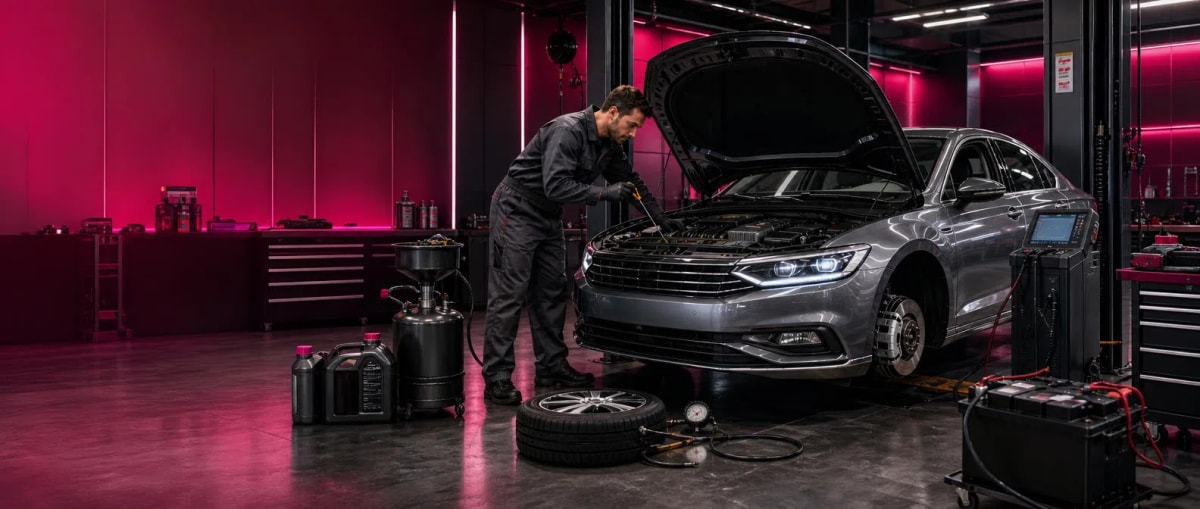
How is a Vehicle Technical Inspection Conducted?
Vehicle technical inspection is performed to check the condition of the vehicle's main systems and parts, identify potential malfunctions in a timely manner, and ensure safe operation. During the inspection, the engine, engine oils, tires, battery, brake system, technical fluids, lighting, and other important components may be examined.
Technical inspection is not limited to checks performed only after a problem arises in the car. During regular monitoring, a decrease in oil level, tire wear, battery weakening, and changes in the brake system can be identified earlier.
In this guide, we explain which parts are checked during a vehicle technical inspection and what points should be paid attention to regarding engine oils, car oil, machine oil, tires, battery, and brakes.
What does a vehicle technical inspection cover?
During a vehicle technical inspection, the main systems affecting the vehicle's safety and normal operation are checked. The scope of the inspection may vary depending on the car's model, age, mileage, and usage conditions.
The main areas checked are:
engine and engine oil;
tires and tire pressure;
battery and electrical system;
brake system;
technical fluids;
lighting and signaling systems;
steering and suspension elements;
visible leaks and other signs of malfunction.
If a problem is detected during the inspection, additional diagnostics and maintenance may be required to determine its cause.
Why are engine oils important?
Engine oils help reduce friction between the moving parts of the engine, protect the parts, and help the engine operate at a normal temperature regime.
The function of the oil is not just to “lubricate” the engine. It also helps manage contamination within the engine and maintain the operating conditions of the parts.
For this reason, using oil that is unsuitable for the engine or expired can increase the risk of technical problems.
When should car oil be changed?
Car oil should be changed after a certain mileage or time interval. The exact interval depends on the car model, engine, usage conditions, and manufacturer's recommendation.
Frequent stop-and-go driving in the city, short distances, and heavy operating conditions can affect the oil's properties.
When changing the oil, not only the oil itself but also the appropriate oil filter should be considered. For the most accurate interval, one should rely on the manufacturer's recommendation in the car's user manual.
What should be considered when choosing machine oil?
When choosing machine oil, looking only at price and brand is not correct. The oil's viscosity, specification, and compliance with engine requirements are key criteria.
Different engine versions of the same car model may have different oil requirements. Therefore, instead of the approach that “this oil is suitable for all cars,” the technical requirements of the specific engine should be checked.
When choosing between machine oils, it is a safer approach to choose a product that meets the standards recommended by the manufacturer.
How to maintain tires?
The condition of the tires affects both driving safety and the car's handling characteristics. Therefore, it is important to check them regularly, not just when they need to be replaced.
During the inspection, attention should mainly be paid to:
air pressure;
tread wear;
cuts and cracks;
uneven wear;
the tire's production date and general condition.
The condition of the tires should be checked especially before a long trip.
Why is tire pressure important?
Maintaining the correct air pressure in the tire can affect the car's handling, tire wear, and fuel consumption.
Excessively low or high pressure can prevent the tire from making proper contact with the road. Therefore, the pressure should be maintained according to the indicator set by the car manufacturer.
It is useful to check the pressure when the tires are cold and to monitor it periodically even in a car that is not used for a long time.
When should tires be replaced?
Replacing a tire is not determined only by waiting for the tread to wear out completely. Cracks, bulges, serious damage, and uneven wear can also cause a need for replacement.
The age of the tire should also be considered. Tires that have been used for a long time may have changed material properties even if they look normal on the outside.
In case of doubt, having the tire checked by a specialist is a safer choice.
When should the battery be replaced?
The battery plays an important role in starting the car's engine and providing energy to electrical systems.
Difficulty starting the engine, dimming lights, and unusual behavior in the electrical system may indicate that the battery is weakening.
However, the cause of the problem is not always the battery. The alternator, electrical system, and other components should also be checked. Therefore, it is more appropriate to perform diagnostics before making a replacement decision.
How to extend the life of the battery?
The service life of the battery is affected by the frequency of car usage, air temperature, and the condition of the electrical system.
Keeping the car unused for a long time, leaving electrical equipment on after the engine is turned off, and a weak charging system can create additional load on the battery.
Regularly checking the battery's condition and performing diagnostics without delay when a problem arises in the electrical system can help it work more stably.
What do battery prices depend on?
Battery prices are not determined only by the manufacturer. Capacity, size, starting power, technology, and compatibility with the car are also factors affecting the price.
Choosing a cheaper product does not always yield a more profitable result. The main issue is choosing a battery with the correct indicators for the car's electrical system.
For this reason, when comparing prices, comparing products with the same technical specifications gives a more accurate result.
What should be considered during battery sales?
During battery sales, the product's compatibility with the car, capacity, and technical specifications should be checked.
Before purchasing, in addition to the car's make and model, the battery requirements according to the engine version should be determined. The product's production date, warranty, and terms provided by the seller can also be considered.
For a user looking for a battery on Tenderyard, comparing products by price and other features can facilitate the purchasing decision.
[LINK → Auto Service Materials category. No need to link to the Car category here.]
How to know if there is a problem with the brake system?
Brake is one of the most important safety systems of a car. Therefore, any unusual change related to it should not be ignored.
The following signs may indicate a need for inspection:
unusual noise during braking;
the pedal feeling different than before;
the car pulling to one side during braking;
vibration;
increased braking distance.
If one of these signs is observed, it is safer to have the technical condition of the brake system checked without using the car for a long time.
When should brake pads be replaced?
The service life of brake pads varies depending on the car model and driving conditions. Frequent stop-and-go driving in the city can cause them to wear out faster.
Pad wear can be accompanied by noise, changes in braking performance, and other signs. However, it is possible to accurately determine their real condition only with visual and technical inspection.
When replacing brake pads, it is appropriate to also look at the condition of the discs and other components of the system.
When should a vehicle technical inspection be conducted?
The interval set for vehicle technical inspection is not the same for all cars. The time of the inspection is affected by manufacturer recommendations, the car's mileage, age, and usage conditions.
In addition to planned technical inspection, if unusual noise, vibration, warning light, fluid leak, or change in handling is observed in the car, it is necessary to have the car checked without waiting for the next inspection time.
Recording the dates of previous technical inspections and the problems detected during those inspections makes it easier to track the time for the next technical inspections.
What mistakes should be avoided in car maintenance?
One of the most common problems in car maintenance is that technical maintenance is carried out only after a malfunction occurs.
Besides that:
using unsuitable oil;
not checking tire pressure for a long time;
ignoring signs of battery weakening;
ignoring noises and vibrations in the brakes;
not considering manufacturer recommendations
can increase the risks of operating the car.
Regular inspection usually allows for early detection of the problem and prevention of the need for larger repairs.
Simple checklist for car maintenance
There is no need to disassemble the entire car for daily and weekly monitoring. The driver can regularly monitor a few key indicators.
During daily use
warning lights;
brake behavior;
unusual noises from the car.
Regularly
tire pressure;
engine oil;
battery;
general condition of tires.
During service
brake system;
filters and fluids;
engine and other technical components.
Such simple monitoring helps to feel changes in the car's condition faster.
Frequently asked questions
How often should machine oil be changed?
The exact interval varies depending on the car model, engine characteristics, and usage conditions. The most accurate information is shown in the manufacturer's technical recommendation.
How long is the battery's life?
The service life depends on usage conditions, air temperature, the car's electrical system, and the battery's own characteristics.
What should the tire pressure be?
The recommended pressure varies depending on the car model. This information is usually shown on the information plate on the driver's door or in the car's user manual.
What to do if there is noise from the brakes?
Unusual noise during braking can be related to various reasons. To determine the cause, the brake system must be inspected.
Conclusion
Vehicle technical inspection requires regular monitoring of the condition of the engine, oil system, tires, battery, and brakes. A timely technical inspection can help maintain the car's safety and prevent unexpected malfunctions.
Engine oils should be chosen correctly and changed on time, tire pressure and wear should be kept under control, the battery should be checked when it shows signs of weakening, and any change in the brake system should be taken seriously.
When looking for products and services needed for the car, it is possible to compare relevant ads on Tenderyard, review prices, and choose options according to needs.
Especially before buying a car, checking the technical condition is an important part of the selection process. For other issues to be checked during purchase, you can look at the article What to Pay Attention to When Buying a Car?.
Comments0
Be the first to comment
Share your thoughts on this article