

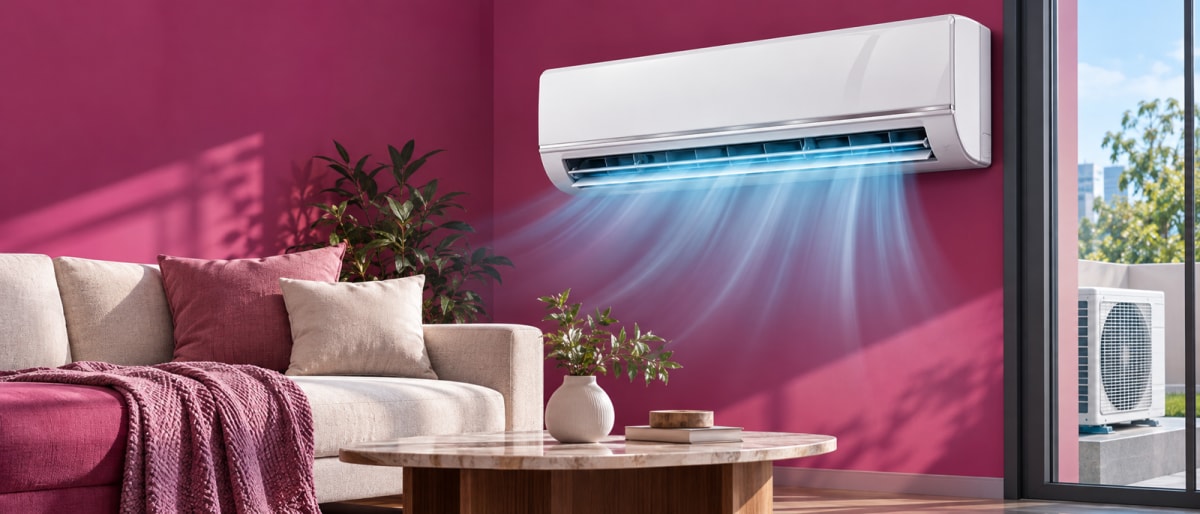
Why Is the Air Conditioner Not Cooling? Main Reasons
The main function of an air conditioner is to lower the room temperature. However, if the room is not cooling sufficiently while the device is running, there could be several different reasons. Sometimes the problem is simply related to a dirty filter or an incorrect mode selection, while in other cases, a malfunction requiring technical intervention may occur.
The answer to the question why the air conditioner is not cooling can vary depending on the device model, usage conditions, and when the problem arose. The fact that the air conditioner is blowing air does not necessarily mean it is cooling normally. Therefore, to correctly identify the problem, the device's operating mode, airflow, filter condition, and technical parts of the cooling system should be checked.
Why is the air conditioner not cooling?
If the air conditioner is not cooling, first of all, it is necessary to check if the device is running in the correct mode. If the air conditioner is not in cooling mode but is running in ventilation or another mode, it may not provide cold air to the room.
In addition, the following reasons can also cause cooling to weaken:
contamination of the air conditioner filter;
contamination of the indoor or outdoor unit;
decrease in refrigerant gas level;
problems with drainage or airflow;
obstruction of the outdoor unit;
choosing an air conditioner with power unsuitable for the room size;
malfunction in the compressor and other technical parts;
incorrect temperature setting.
To determine the cause of the problem, it is also necessary to pay attention to how long the air conditioner has been cooling poorly and whether there have been other changes in the device.
Why does it not cool when the air conditioner filter is dirty?
The air conditioner filter helps trap dust and other particles in the air entering the indoor unit. If the filter is not cleaned for a long time, dust can accumulate on it, and the airflow can weaken.
When the airflow decreases, it becomes difficult for the air conditioner to circulate the air in the room, and as a result, cooling efficiency can drop. In this situation, the device is running and blowing air, but the room does not cool down as before.
Checking the condition of the filter is one of the simple steps that can be performed by the user themselves. During cleaning, the device should be turned off, and the manufacturer's instructions for the specific model should be followed.
If the cooling problem persists after cleaning the filter, it is not correct to look for the cause only in the filter. Other components may also need to be checked.
What could be the reason if the air conditioner is not cooling well?
If the air conditioner is not cooling well, there may not be just one reason for the problem. For example, even if the filter is clean, if the outdoor unit's air circulation is weak or there is a problem in the cooling system, the device's performance may drop.
The size of the room should also be considered. The cooling power of the air conditioner must be suitable for the area of the space and other heat factors. Direct sunlight, the presence of numerous heat sources, and keeping doors and windows open for a long time can also make it difficult for the room to cool down.
Therefore, if the air conditioner is not cooling as it used to, simple reasons should be checked first, and if the problem is not resolved, technical diagnostics should be carried out.
What are the possible reasons if the air conditioner is not blowing cold air?
If the air conditioner is not blowing cold air, first check the mode and temperature settings on the remote control. If the device is not running in cooling mode, even if there is airflow, the expected cold air may not be obtained.
On the other hand, if the air coming from the air conditioner is cooling weakly, the possibility of a dirty filter, restricted airflow, or a problem in the cooling system should be considered.
The normal operation of the outdoor unit is also important. If there are obstacles in front of the outdoor unit that restrict airflow, it may be difficult for the device to dissipate heat.
If the air conditioner is still not blowing cold air after simple checks, it is more appropriate to have it checked by a technical specialist.
Does cooling weaken when the air conditioner gas decreases?
The refrigerant, often called air conditioner gas, is involved in heat transfer in the air conditioner's cooling circuit. If the amount of refrigerant in the system is insufficient, the device's cooling capacity may weaken.
A decrease in the refrigerant level can usually be related to technical problems such as a leak in the system. Therefore, simply adding gas may not solve the root cause of the problem. Refilling the system without identifying the source of the leak can lead to the problem recurring.
If the air conditioner is cooling weaker than before, the room temperature does not drop sufficiently despite running for a long time, and other simple causes have been eliminated, the cooling system may need to be inspected by a technician.
What happens when the air conditioner compressor is faulty?
The air conditioner compressor is one of the main components of the cooling circuit. Since the compressor is one of the main mechanisms that ensures the circulation of the refrigerant within the system, a problem in its operation can directly affect the air conditioner's cooling.
In case of a malfunction related to the compressor, the device's cooling performance may weaken or the cooling process may not occur at all. In some cases, the air conditioner appears to be running, but it does not provide enough cold air to the room.
Since the compressor consists of technical and electrical components, its inspection and repair should not be carried out by the user. In such a case, professional diagnostics are required.
How does the outdoor unit affect the air conditioner's cooling?
It is not correct to focus only on the indoor unit of the air conditioner. The outdoor unit is also an important part of the cooling process. If air circulation around the outdoor unit is restricted or the unit is excessively dirty, heat dissipation can become difficult.
Placing objects in front of the outdoor unit, blocking air intake/exhaust, and severe contamination can hinder the normal operation of the device.
Therefore, if the air conditioner is not cooling, the condition of the outdoor unit should also be checked. However, instead of dismantling the internal parts and technical components of the device, it is safer to show the problem to a specialist.
Does the air conditioner's temperature setting affect cooling?
Choosing the correct temperature setting affects the air conditioner's operating mode. After ensuring that the device is running in cooling mode, the temperature indicator should also be checked.
If a very high temperature is selected, the air conditioner may not cool the room as expected. At the same time, the characteristics of the space where the device is operating should also be considered.
If the air conditioner does not cool sufficiently for a long time even when the temperature setting is correct, the problem cannot be linked only to the parameters on the remote control. The filter, airflow, and technical systems should also be checked.
What to do if the air conditioner is not cooling?
When the air conditioner's cooling capacity weakens, you can first consider simple points that the user can safely check:
Check if the air conditioner is running in cooling mode;
Check the temperature setting;
Check if the air conditioner filter is dirty;
Check that there is no obstruction to airflow in front of the indoor and outdoor units;
Check for severe contamination on the visible part of the outdoor unit;
If the problem persists, contact a service specialist.
It is not correct to open the internal parts of the air conditioner, interfere with the compressor, or refill the refrigerant on your own. These tasks may require special equipment and technical knowledge.
When should the air conditioner be serviced?
If the answer to the question why the air conditioner is not cooling is not found after simple checks and the device is not working normally, it is necessary to contact a service.
Professional diagnostics are especially important in the following cases:
if the room does not cool even though the air conditioner has been running for a long time;
if only hot or insufficiently cooled air comes from the device;
if the outdoor unit is not working normally;
if icing is observed on the indoor or outdoor unit;
if there are unusual noises coming from the device;
if cooling has suddenly weakened;
if a refrigerant leak is suspected;
if there is a possibility of a problem with the compressor or other technical components.
To accurately determine the cause of the technical problem, it is more appropriate to have diagnostics performed by a specialist.
What should be paid attention to for the air conditioner to cool well?
Regular maintenance is essential for the air conditioner to work normally for a long time. Cleaning filters on time, paying attention to the condition of indoor and outdoor units, and proper installation of the device can help the cooling system function normally.
In addition, when choosing an air conditioner, it is necessary to pay attention to the area of the space and the cooling power of the device. If a model with power unsuitable for the space is chosen, the device's operating mode and cooling result may not be as expected.
In case of recurrence of the problem or the device losing its previous performance, a technical inspection is a more correct approach.
Conclusion
There can be several answers to the question why the air conditioner is not cooling. A dirty air conditioner filter, incorrectly selected mode and temperature setting, restricted airflow, problems with the outdoor unit, malfunctions related to air conditioner gas, and technical problems with the air conditioner compressor can cause cooling to weaken.
If the air conditioner is not cooling, it is possible to first check simple points such as mode, temperature, and filter. If the problem persists, instead of interfering with technical parts on your own, you should contact a specialist. Thus, the cause of the malfunction can be correctly identified, and appropriate technical measures can be taken.
Comments0
Be the first to comment
Share your thoughts on this article